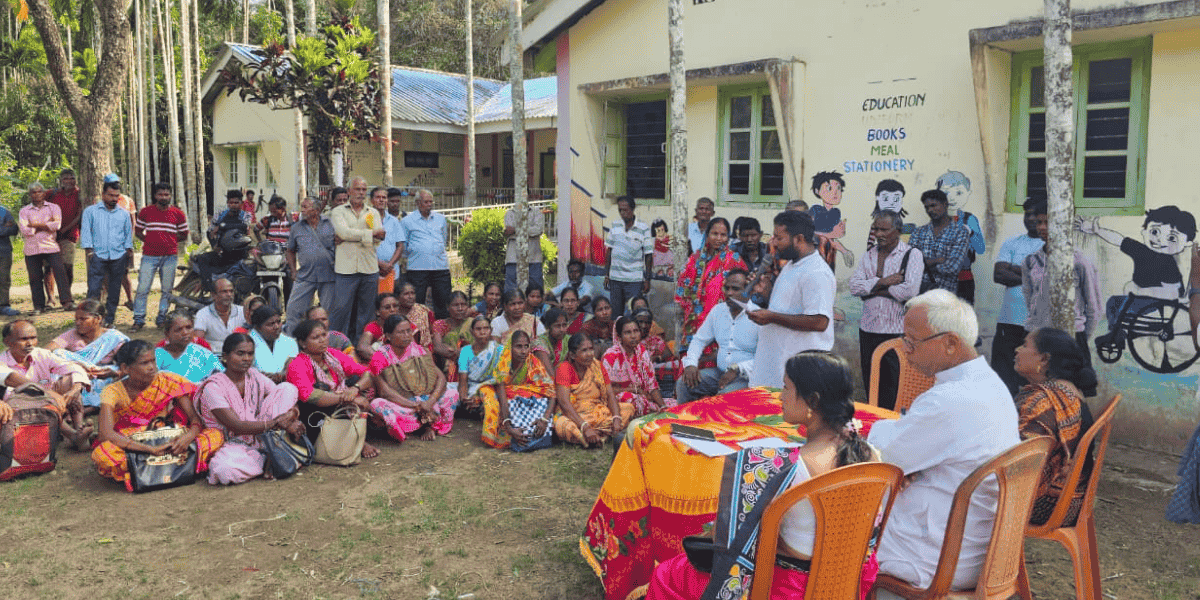
Residents of forest encroachment pockets across Diglipur Tehsil, who have lived in the area for 30 to 40 years without access to basic amenities, voiced long-standing grievances and requested permanent settlement through legal recognition of occupancy rights. The families have faced decades of hardship, struggling to secure a livelihood while residing in remote and underserved areas.
MP Bishnu Pada Ray met with the residents to hear their concerns and pledged to take the matter up with the relevant government authorities. He assured villagers that he would advocate for a positive and compassionate resolution, considering both legal frameworks and national interests.

During the interaction, the residents highlighted the absence of essential services such as water supply, electricity, sanitation, and proper roads, emphasizing that their decades-long settlement has been marked by continuous struggles to maintain a decent standard of living. They urged intervention for recognition of their occupancy rights and formal legalization of their settlements.
Ray stated that any resolution would be pursued with guidance from Mohan Bhagwat, Chief of the Rashtriya Swayamsevak Sangh, emphasizing the need for a lawful and balanced approach. He noted that ensuring settlement in border areas must also take into account national security concerns while safeguarding the welfare of the residents.
The MP assured villagers that their longstanding demands would be presented to the government for sympathetic consideration. He reiterated that the process would aim to provide legal protection to families while ensuring compliance with forest and land regulations.

Local officials noted that the forest encroachment pockets are home to several hundred families who have contributed to the region’s economy and culture despite a lack of formal recognition or access to public services. Their requests for settlement reflect a broader demand for policy intervention in border areas where residents have historically faced marginalization.
Ray’s visit is expected to initiate formal discussions with administrative authorities to explore legal pathways for occupancy rights, development of basic infrastructure, and the sustainable integration of the settlements within the national framework. The initiative marks a step toward addressing decades-old grievances while balancing humanitarian concerns with regulatory requirements.