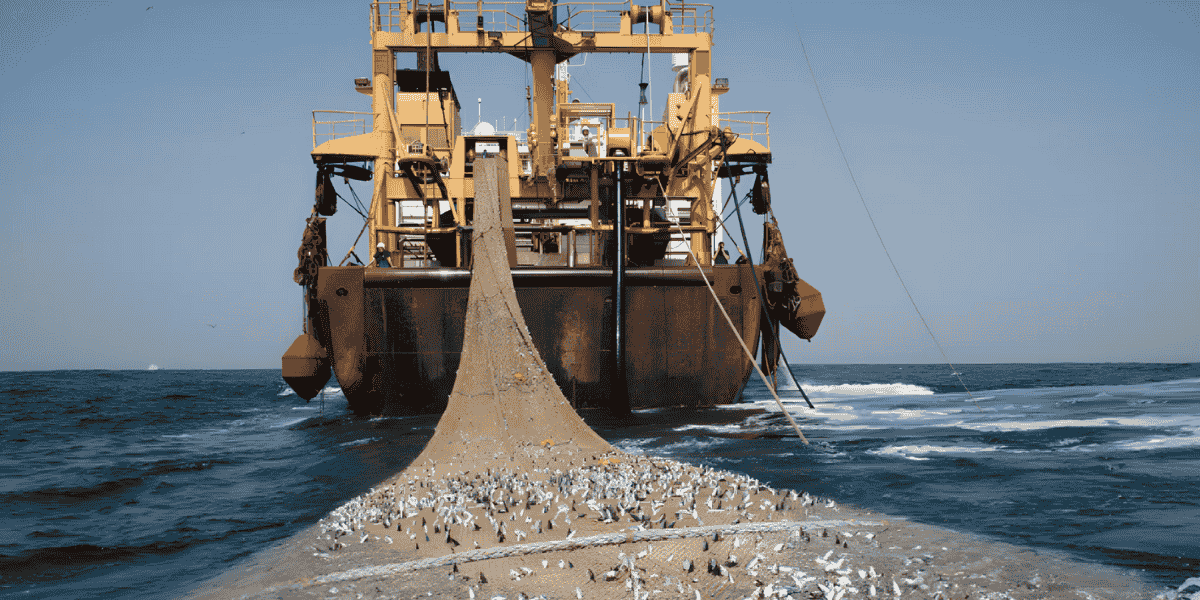
Union Home and Cooperation Minister Amit Shah on Monday launched a major initiative to strengthen India’s fisheries sector through the distribution of deep-sea fishing vessels under the Pradhan Mantri Matsya Sampada Yojana (PMMSY). The programme, he said, aims to make India self-reliant, sustainable, and cooperative-driven in tapping the country’s vast marine wealth, with special focus on island territories such as the Andaman & Nicobar Islands.
Speaking at the launch event at Mazagon Dock in Mumbai, in the presence of Maharashtra Chief Minister Devendra Fadnavis, Deputy Chief Ministers Eknath Shinde and Ajit Pawar, and Ports and Fisheries Minister Nitesh Rane, Shah underlined that this effort would transform the livelihoods of fishermen along India’s 11,099-kilometre coastline, including those living in remote island regions. He said the scheme is set to bring a significant change in the lives of people working in fisheries, turning the sector into a source of dignity, prosperity and self-reliance for coastal and island communities.
Calling it a historic milestone, Shah said this is the first time in India that deep-sea fishing vessels will be owned and operated by fishermen cooperatives instead of private companies. “This is not just a distribution of vessels; it is a distribution of dignity, prosperity and self-reliance,” he remarked. He said the government’s goal is to ensure that the benefits arising from the fisheries industry reach directly to the toiling fishermen and the poor families associated with cooperative societies, including those across India’s island chains.

He announced that in the next five years, around 200 trawler fishing boats will be built and operated through cooperative societies. These vessels will enable small fishing groups to move from traditional near-shore fishing to deep-sea operations, expanding their reach and increasing their incomes three to four times by accessing premium fish species such as tuna, a major opportunity for fishermen in the Andaman & Nicobar Islands, who are strategically located close to rich tuna fishing grounds.
Shah said cooperatives are the backbone of India’s Aatmanirbhar Bharat vision, ensuring that profits from production and markets flow directly to hardworking rural and island families. “Whether it is milk production, the market, or fisheries, the profit belongs to the hardworking individual, a poor person living in rural areas. Only when these poor people become economically prosperous does the country truly prosper,” he said.
He also emphasised sustainability and responsible resource management as key to the future of the fisheries sector. The initiative aligns with India’s Blue Economy goals, aimed at protecting marine ecosystems, preventing overfishing, and ensuring long-term resource viability. Shah called upon coastal states and Union Territories, including the Andaman & Nicobar Administration, to replicate Maharashtra’s model and assured Central support for strengthening coastal infrastructure such as cold chains, ports, and processing facilities. He said India is poised to become one of the top global fish producers by 2030, contributing significantly to Viksit Bharat.
According to a government release, each deep-sea fishing vessel costs around ₹1.2 crore, with financial support from the Government of Maharashtra, the National Cooperative Development Corporation (NCDC), and the Department of Fisheries, Government of India. The initiative aims to enhance deep-sea fishing capacity, promote cooperative-led growth, and modernise India’s marine fisheries. It will also help explore fisheries resources in the Indian Exclusive Economic Zone (EEZ) and high seas.
The release added that India’s marine fisheries sector has traditionally relied on modest-scale operations, with fishermen using conventional boats and venturing only 40–60 nautical miles from the shore. This limited range has kept catch volumes and incomes low. The new deep-sea vessel initiative is expected to empower fisheries cooperative societies and Farmer Producer Organisations (FFPOs) to sustainably harness the vast potential of India’s EEZ and high seas, particularly in regions such as Lakshadweep and the Andaman & Nicobar Islands. With the archipelago’s proximity to rich marine biodiversity and its growing cooperative network, the islands are expected to play a crucial role in India’s deep-sea fisheries expansion.
By promoting high-value fisheries such as tuna and building cold-chain infrastructure across the islands, the government envisions transforming Andaman & Nicobar’s fisheries into a high-yield, sustainable sector that supports both local employment and national export growth. The deep-sea fishing vessel programme thus represents a strategic shift towards modernisation, sustainability, and cooperative-driven development, redefining the future of fishing communities across India’s coasts and islands.