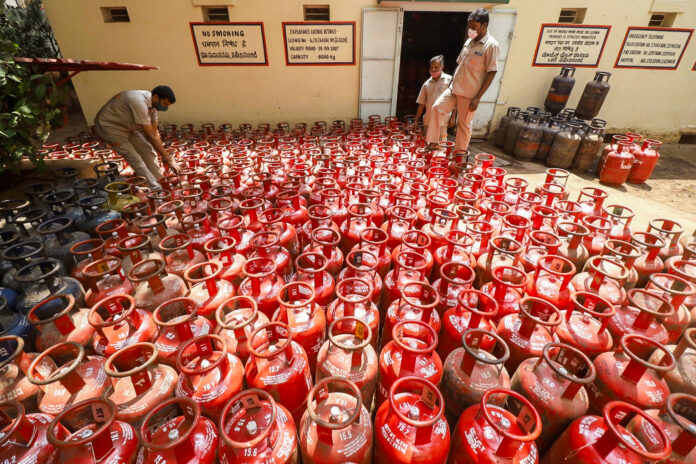
The Centre has increased the allocation of commercial LPG to states and Union Territories to 50 per cent, adding an additional 20 per cent supply to support key sectors amid ongoing supply concerns linked to global conditions.
The Ministry of Petroleum and Natural Gas said the enhanced allocation includes an earlier 20 per cent restoration and an additional 10 per cent linked to ease of doing business reforms for PNG expansion. The latest increase is aimed at stabilising supply for commercial consumers while ensuring priority distribution across essential sectors.
According to the ministry, the additional 20 per cent allocation will be directed towards high-demand segments such as restaurants, dhabas, hotels, industrial canteens, food processing units, dairy operations, and subsidised food outlets run by state governments and local bodies. Community kitchens and migrant labour segments, including the supply of 5 kg free trade LPG cylinders, have also been included in the priority list.

Officials indicated that the decision comes as part of a calibrated response to supply pressures, even as geopolitical factors continue to affect global energy movement. The government had earlier partially restored commercial LPG supply by allowing a 20 per cent allocation, followed by an incentive-based 10 per cent distribution tied to PNG infrastructure expansion.
Implementation of the revised allocation has progressed across the country, with 20 states and Union Territories issuing orders in line with central guidelines. In regions where such directives are yet to be formalised, public sector oil marketing companies have continued to release commercial LPG cylinders to meet demand.
The ministry said that approximately 13,479 metric tonnes of commercial LPG has been lifted by businesses across states and Union Territories over the past week, indicating ongoing consumption despite supply constraints.
Educational institutions and hospitals have been identified as critical sectors, receiving around 50 per cent of the total commercial LPG allocation. This prioritisation reflects the government’s attempt to safeguard essential services while balancing supply limitations.
Despite the increase in allocation, officials acknowledged that LPG availability remains a concern due to prevailing geopolitical conditions. However, they noted that domestic LPG production from refineries has been stepped up, and panic booking trends have declined in recent days.
The government also highlighted improvements in distribution efficiency, stating that a majority of LPG deliveries are now being carried out through the Delivery Authentication Code (DAC) system, aimed at ensuring transparency and reducing diversion.

Addressing broader fuel availability concerns, the ministry said there have been no reports of fuel shortages at retail outlets. It reiterated that adequate stocks of petrol and diesel are being maintained, and urged the public to avoid panic buying.
Refineries across the country are operating at high capacity, supported by sufficient crude oil inventories. The government maintained that supply chains remain stable and are being closely monitored to prevent disruptions.
The decision to expand commercial LPG allocation reflects an attempt to manage competing demands in a constrained supply environment. While essential sectors continue to receive priority, authorities have signalled that sustained vigilance and responsive policy measures will be required to maintain balance in the energy supply system.