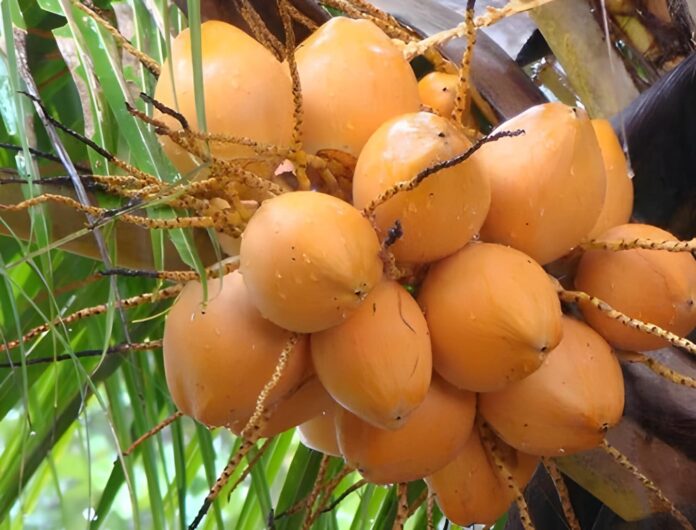
A series of technical training programmes conducted by the Coconut Development Board (CDB) this week provided agriculture officials from South, North and Middle Andaman with detailed insights into improved farming practices, updated government schemes and scientific approaches to coconut cultivation. The sessions, held separately in Sri Vijaya Puram and Nimbudera, aimed to strengthen the knowledge base of field-level officers and enhance support services for farmers across the islands.
The first programme took place in Sri Vijaya Puram for agriculture officials from South Andaman. The session was inaugurated in the conference hall of the Agriculture Department, where participants were briefed on the latest Coconut Development Board schemes and revised guidelines. Trainers explained how the updated provisions are designed to promote sustainable production, disease-resistant varieties and improved processing opportunities for coconut growers. Officials said that understanding the detailed components of these schemes is crucial for enabling farmers to access benefits efficiently.
Technical sessions in the programme were led by subject specialists, who outlined scientific practices associated with coconut farming. These included nutrient management, pest and disease control, intercropping strategies and soil health assessments. The speakers highlighted the importance of adopting modern cultivation techniques to improve yield and resilience, particularly in island regions where soil patterns, weather variability and land constraints require tailored agricultural practices. Demonstrations and discussions focused on practical field-level issues that agriculture officers commonly encounter.
A parallel training session was held at the Krishi Vigyan Kendra (KVK) in Nimbudera for officials from North and Middle Andaman. The programme followed a similar structure, covering Coconut Development Board guidelines and offering multiple technical presentations by KVK subject matter specialists. The trainers emphasized region-specific challenges faced by coconut growers in northern and central parts of the islands, including pest prevalence, limited irrigation sources and the need for improved planting material. Participants were encouraged to incorporate scientific recommendations into their advisory services for farmers.

Across both training locations, officials reiterated that enabling field staff with updated information is essential for boosting farmer outreach and creating sustainable agricultural systems. The Coconut Development Board’s initiatives were introduced as part of a broader effort to help farmers increase productivity while reducing losses arising from climate variations and crop infestations. Participants discussed case examples from their respective zones, exchanged field observations and sought clarity on scheme implementation procedures.
Altogether, 60 field-level agriculture officials attended the sessions. Trainers encouraged participants to use the information to strengthen farmer guidance programmes, including community demonstrations, field meetings and village-level technical camps. They stressed that agriculture officers act as key intermediaries between scientific institutions and farmers, and their understanding of improved techniques can significantly influence local farming outcomes.
Officials attending the sessions also noted that coconut farming continues to be a major livelihood source in several parts of the islands. With rising demand for value-added products, improved cultivation methods and better access to government schemes, growers have an opportunity to expand their income base. The training programmes, they said, are expected to help officers guide farmers more effectively in areas such as pest surveillance, seedling selection, nutrient balancing and post-harvest handling.
By concluding two rounds of district-level programmes within the same week, the Coconut Development Board signalled its intent to continue working closely with the Agriculture Department to modernise coconut cultivation practices in the islands. Trainers expressed confidence that with continued capacity building, field officers will be able to enhance productivity, strengthen farmer participation in board schemes and ultimately contribute to better agricultural outcomes across the Andaman and Nicobar Islands.