A large-scale pollution response exercise was conducted off Sri Vijaya Puram by the Indian Coast Guard under the aegis of the Andaman and Nicobar Command (ANC), bringing together multiple agencies to assess preparedness for major marine pollution incidents. The two-day Regional Level Pollution Response (PR) Exercise focused on testing coordination mechanisms, evaluating operational readiness and strengthening collective capability to tackle oil spills in the island waters.
The exercise began with extensive briefings from participating stakeholders, who outlined their respective roles in a pollution response scenario. Officials discussed the framework provided under the National Oil Spill Disaster Contingency Plan (NOSDCP), examining available resources, deployment strategies and support systems required for a coordinated response. The first day featured a comprehensive table-top simulation of a heavy oil spill near Sri Vijaya Puram Harbour. Agencies assessed communication flow, decision-making procedures and response timelines in a controlled environment to identify potential gaps in existing systems.
The table-top phase allowed various departments to evaluate how information is escalated, how command structures function under pressure and how quickly agencies can mobilise assets. Officials examined scenarios involving rapid containment needs, environmental sensitivity zones and movement of ship traffic. The simulation highlighted the importance of inter-agency linkage, as pollution response often requires quick intervention using both maritime and aerial assets.

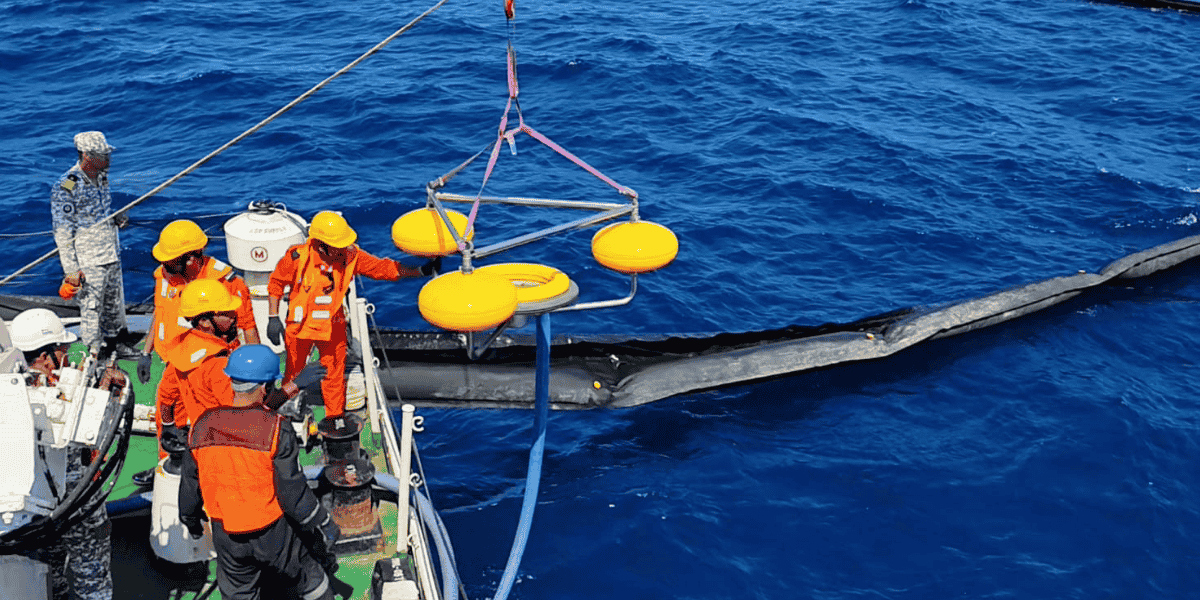
On the second day, a full-scale sea exercise was carried out, bringing operational platforms directly into the field. Offshore Patrol Vessels configured for pollution response were deployed alongside other surface units and aircraft. Containment booms were laid around the simulated oil spill to demonstrate the ability to control spread in open waters. Teams worked to recover the simulated pollutant, showcasing equipment handling and coordination among vessel crews.
Aerial assets, including Coast Guard Dornier aircraft and Chetak helicopters, were also mobilised as part of the drill. Using spray pods, the aircraft demonstrated aerial dispersal techniques used to restrict the spread of oil slicks. The integration of surface and aerial operations reaffirmed the Coast Guard’s capability to deliver rapid and multi-pronged response efforts during real pollution incidents.
The exercise also highlighted the strategic importance of the Andaman and Nicobar region, which lies along crucial shipping routes that witness significant maritime traffic. Officials noted that any pollution event in the area could pose risks to sensitive marine ecosystems, fishing zones and coastal communities. Strengthening preparedness in the region is therefore essential to mitigate potential environmental and economic impacts.

Throughout the exercise, emphasis was placed on early detection, coordinated communication and timely deployment of pollution response equipment. Agencies examined how quickly they could activate contingency procedures, mobilise support vessels, and integrate operations with aerial reconnaissance. The drill also reinforced the need for continuous training, equipment modernisation and periodic multi-agency rehearsals to ensure operational efficiency.
The Coast Guard conducts such exercises periodically to ensure that agencies remain aligned with national protocols and maintain readiness for emergency situations. With the latest drill, officials have reiterated the importance of maintaining a robust preparedness framework, especially in geographically sensitive regions like the Andaman and Nicobar Islands. The exercise concluded with a review of observations and operational takeaways that will be used to refine response mechanisms.