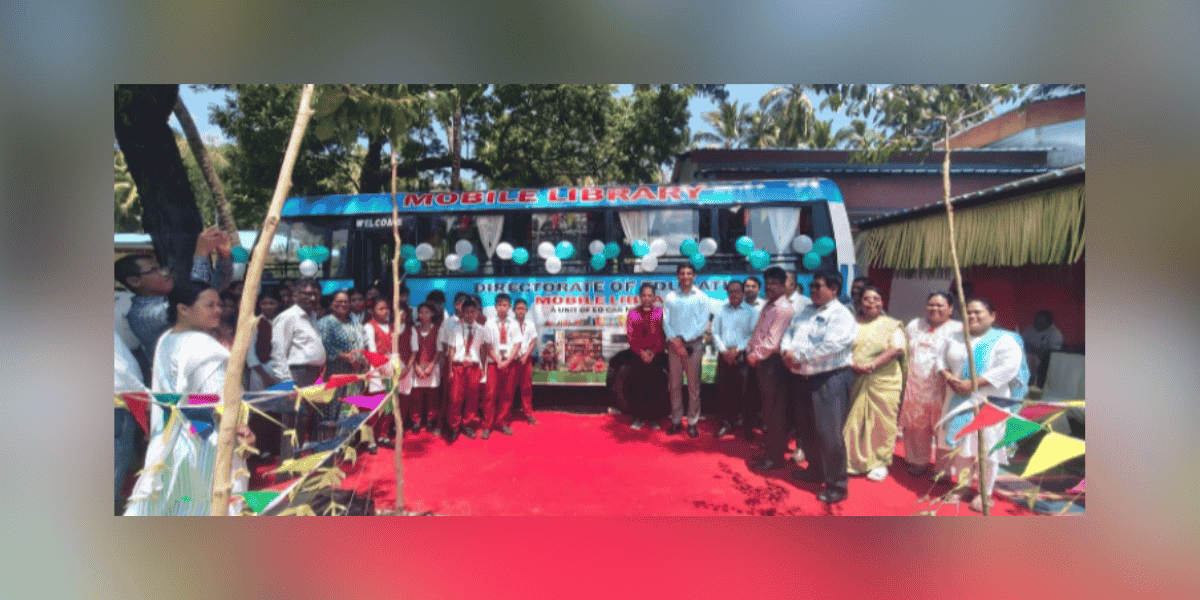
In a move aimed at strengthening access to knowledge in remote island communities, a Mobile Library was inaugurated at Mus Village near Bishop’s House in Car Nicobar on Monday. The initiative has been implemented by the Directorate of Education as part of efforts to promote inclusive education and foster a sustained reading culture in the Nicobar district.
The mobile facility is expected to serve residents in and around Mus Village, particularly children and young learners who may otherwise have limited access to library infrastructure. By bringing books and learning materials directly to communities, the Administration seeks to bridge geographical constraints that often affect remote island habitations.
For operational mobility, a bus has been provided by the Transport Department, Car Nicobar. Officials said the dedicated vehicle will enable systematic outreach to identified locations, ensuring that books and educational resources are made available to a wider segment of the population.

The launch event was attended by local officials and members of the community. Amit Kale, Deputy Commissioner of Nicobar District, inaugurated the Mobile Library and highlighted the importance of reading in shaping knowledge, values and critical thinking. He emphasised that access to books can play a transformative role in the lives of children, particularly in geographically isolated regions.
Education authorities described the initiative as part of a broader strategy to expand learning opportunities beyond conventional classrooms. The mobile library model is designed to function as an outreach extension of formal schooling by encouraging voluntary reading habits among students and community members alike.
Swapan Paik, Education Officer, Nicobar Zone, elaborated on the objectives of the programme, outlining its focus on accessibility and sustained engagement. The initiative aims not only to distribute books but also to create a culture in which reading becomes a regular and valued activity within households and community spaces.
Officials indicated that the selection of Mus Village reflects a targeted approach to reaching remote pockets where physical library facilities may not be readily available. By deploying a mobile platform, the Department intends to ensure that educational resources are not restricted by location.
The programme aligns with the Administration’s emphasis on inclusive growth and community development. Access to reading materials is considered a foundational component in improving literacy levels, enhancing language skills and broadening awareness among young learners.

The mobile library is expected to carry a range of books suitable for different age groups, including children’s literature and general reading material. Authorities said structured visits and schedules will be drawn up to maximise coverage and encourage repeat engagement from beneficiaries.
The initiative also seeks to involve local stakeholders in sustaining momentum. Community participation is viewed as essential to ensuring that the mobile library becomes an integral part of village life rather than a one-time outreach activity.
With the inauguration at Mus Village, the Administration has signalled its intent to extend educational infrastructure in innovative formats suited to island geography. Officials indicated that continued monitoring and community feedback will guide the expansion and refinement of the programme in the coming months.