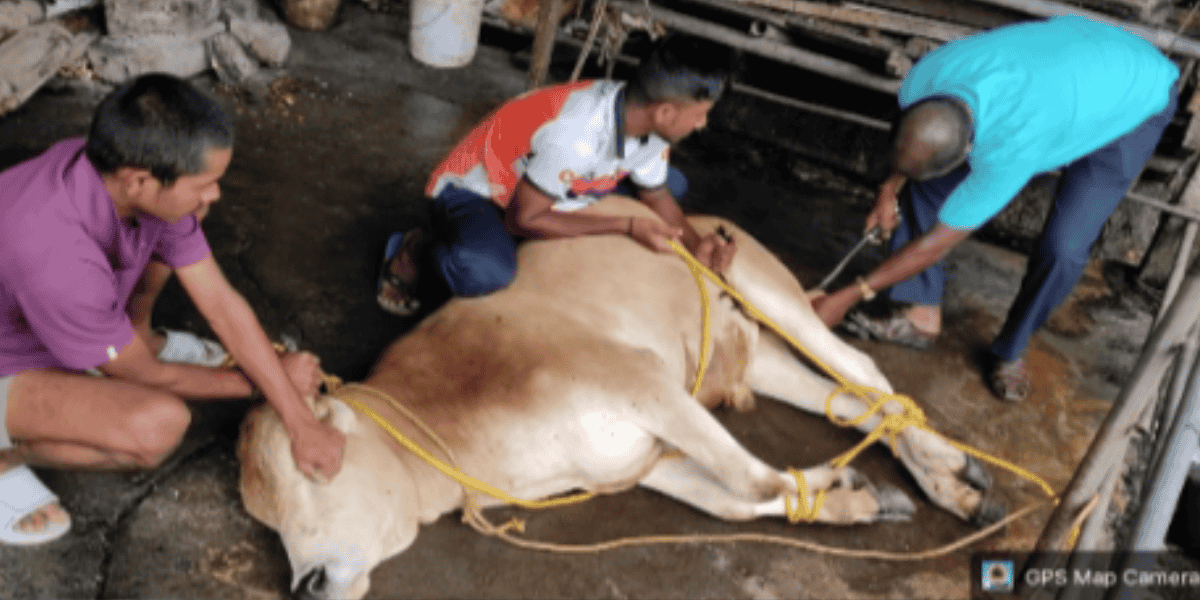
A targeted intervention to manage the growing population of stray bulls in urban areas has been undertaken in Sri Vijaya Puram, with the Department of Animal Husbandry and Veterinary Services carrying out a castration programme across multiple localities to address public safety concerns.
The exercise was conducted over two days, on March 12 and 13, covering areas such as Nayagaon, Anarkali and Middle Point. Officials stated that the initiative is part of ongoing efforts to regulate the movement and behaviour of roaming street bulls, which have increasingly been flagged as a concern in densely populated zones.
The castration procedures were carried out by veterinary personnel, with the Senior Veterinary Officer from Veterinary Hospital Junglighat overseeing and performing the operations. Authorities indicated that the programme was designed to reduce aggressive tendencies among stray bulls, thereby minimising the risk of accidents and disturbances in public spaces.

Officials explained that unmanaged bull populations in urban areas can lead to safety hazards, particularly in localities with high pedestrian and vehicular movement. By reducing aggression levels, the intervention aims to create a more controlled and safer environment for residents.
In addition to behavioural management, the programme also addresses the issue of uncontrolled breeding. Authorities noted that limiting the natural breeding cycle of stray bulls is essential in preventing a further rise in their numbers within urban settings, where resources and space are already constrained.
The initiative is also being positioned as part of a broader push towards promoting scientific livestock management practices. By curbing unregulated breeding, the department aims to encourage the adoption of artificial insemination techniques, which are considered more effective in improving the genetic quality and productivity of cattle.
Veterinary officials highlighted that artificial insemination allows for selective breeding, enabling farmers to access improved cattle varieties while reducing the risks associated with uncontrolled mating. The current drive, they said, complements these long-term objectives by addressing immediate urban challenges linked to stray bulls.
The Veterinary Hospital at Junglighat has been regularly undertaking similar activities as part of its mandate to support animal health and urban management. Authorities indicated that such interventions are necessary to balance animal welfare considerations with public safety requirements.

Officials also underscored the importance of community cooperation in ensuring the success of such programmes. Residents have been encouraged to report instances of stray bull-related issues to the nearest veterinary institution, enabling timely response and intervention by authorities.
The department has reiterated its commitment to extending similar drives to other areas based on need, suggesting that the current exercise may be replicated in additional localities where concerns over stray cattle persist.
While the immediate focus remains on reducing risks associated with aggressive bulls in urban spaces, the programme also reflects a longer-term strategy aimed at improving livestock management practices and ensuring safer coexistence between animals and residents in the Islands.