The Department of Animal Husbandry and Veterinary Services has initiated the rearing and production of a fast-growing variety of quails in the Andaman and Nicobar Islands, marking a new intervention aimed at diversifying poultry farming and strengthening local meat and egg production.
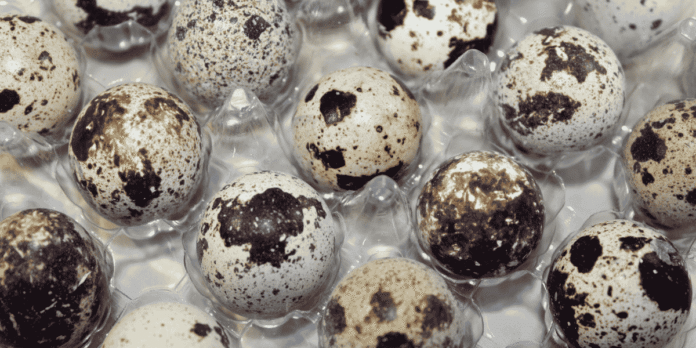
Under the initiative, a new breed known as Broiler Namakkal Quails has been introduced into the island livestock system. As part of the first phase, 2,500 parent stock broiler quail hatching eggs were procured from the Veterinary College and Research Institute, Namakkal, in Tamil Nadu. The eggs were transported to the islands and incubated at the Central Hatchery located at the Livestock Farm Complex in Dollygunj.
Following successful hatching, the broiler quail chicks were reared at the Livestock Farm Complex until they reached the egg-laying stage. With the commencement of egg production, the department began distributing fertile hatching eggs to other livestock units across the islands to scale up production.
In the initial rollout, 1,200 broiler quail hatching eggs have been dispatched to Composite Livestock Farms at Hutbay, Basantipur and Sitanagar. These units will further hatch chicks and supply them to farmers, enabling wider adoption of the new quail variety across different island regions.

Broiler Namakkal quails are known for several production advantages, including rapid growth and early maturity. The birds attain marketable body weight within five to six weeks and begin laying eggs by six to seven weeks of age. They are also characterised by high egg production levels, producing between 250 and 280 eggs per bird annually, along with lower feed requirements compared to other poultry varieties.
Officials noted that the breed’s superior meat quality and higher dressing percentage make it suitable for commercial meat production. At the same time, its dual-purpose nature allows farmers to benefit from both meat and egg output, enhancing overall economic returns.
The department highlighted that broiler quails require minimal space and infrastructure, making them particularly suitable for small and marginal farmers. This is seen as an important factor in the island context, where land availability is limited and traditional poultry expansion faces logistical constraints.

By introducing the new quail variety, the Animal Husbandry Department aims to create additional income avenues for farmers while improving local availability of poultry products. The initiative is also expected to reduce dependence on mainland supplies and strengthen food security within the islands.
Officials indicated that technical guidance and support will accompany the distribution of chicks to farmers to ensure proper management, feeding practices and disease control. The project is being positioned as part of a broader effort to modernise livestock farming and introduce scientifically validated breeds suited to island conditions.
The broiler quail initiative represents a shift towards diversification within the livestock sector, with authorities viewing it as a scalable model that can be expanded based on farmer response and market demand.