India has expressed strong solidarity with Australia following the deadly terror attack at Sydney’s Bondi Beach, even as Australian authorities confirmed that the assailants were a father–son duo of Pakistani origin and investigations pointed towards possible Islamic State links.
External Affairs Minister S. Jaishankar spoke to Australian Foreign Minister Penny Wong on Monday, conveying India’s condolences over the attack and offering full support in the aftermath of the violence, which claimed 16 lives, including that of one of the attackers. Prime Minister Narendra Modi had earlier condemned the attack, describing it as a terrorist assault targeting people celebrating the Jewish festival of Hanukkah, and reiterated India’s zero-tolerance stance on terrorism.
Australian police have identified the attackers as 50-year-old Sajid Akram and his 24-year-old son Naveed Akram, originally from Lahore. The shooting took place on Sunday evening at the ‘Chanukah by the Sea’ event at Bondi Beach, where over a thousand people had gathered to mark the first day of the festival. Sajid was shot dead during a police exchange of fire, while Naveed sustained injuries and remains hospitalised under police guard.
Authorities said the youngest victim of the attack was a 10-year-old girl who later died at a children’s hospital, while the oldest was 87. The incident has been described as the deadliest mass shooting in Australia in nearly three decades, a country otherwise known for strict gun control laws.

Investigators revealed that the two men had earlier told family members they were travelling to the South Coast for a fishing trip. Instead, they allegedly carried out the attack at Bondi Beach. Following the incident, police conducted raids at the family’s residence in Bonnyrigg in south-west Sydney and at an Airbnb property in Campsie, where the duo had been staying.
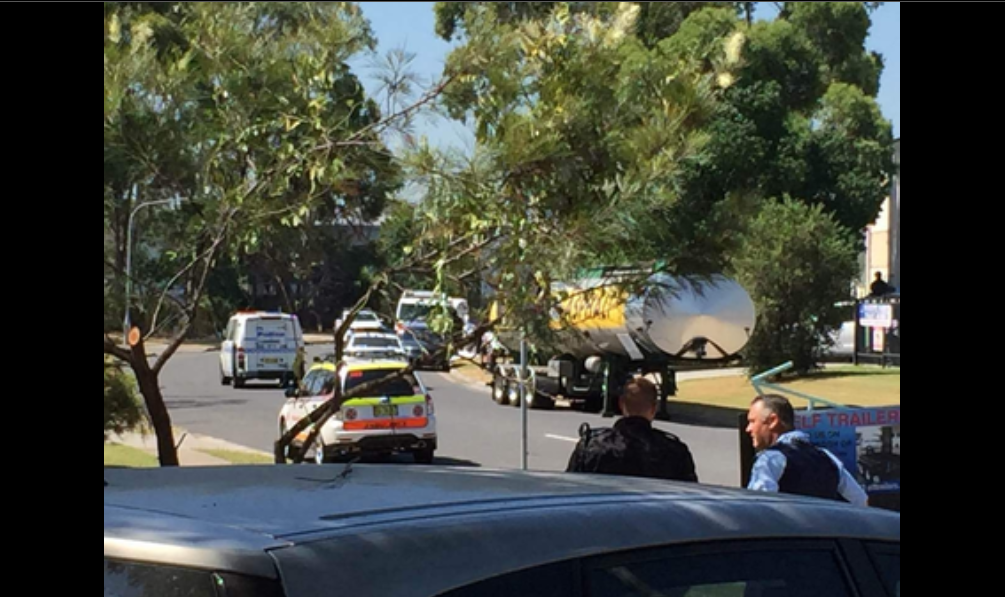
A vehicle linked to the attackers was found on Campbell Parade at Bondi containing several improvised explosive devices. Bomb disposal units were deployed to secure the area. Police later formally declared the incident a terrorist attack after confirming the recovery of explosive materials and other weapons.
The Joint Counter Terrorism Team, comprising state and federal agencies including ASIO, New South Wales Police and the Australian Federal Police, is leading the investigation. According to Australian media reports, two Islamic State flags were recovered from the attackers’ vehicle, one of which was visible in footage from the scene.
Australian authorities confirmed that Naveed Akram, an Australian-born citizen, had come under the radar of domestic intelligence agency ASIO around six years ago, following the disruption of an Islamic State-inspired plot in Sydney. He was investigated for several months but was later assessed as not posing an immediate threat. Officials also said Naveed had links with El Matari, a convicted Islamic State operative currently serving a prison sentence for planning a major terror attack.

ASIO Director-General Mike Burgess confirmed that one of the attackers was known to the agency, though not considered an immediate risk at the time. Australian Prime Minister Anthony Albanese stated that the attack deliberately targeted the Jewish community on the first day of Hanukkah.
Sajid Akram had been a licensed firearms holder for nearly a decade, according to police. Media reports said Naveed, an unemployed bricklayer, had lost his job two months ago after his employer became insolvent. The family had moved into a three-bedroom house purchased in 2024.
While the investigation continues and authorities have yet to formally confirm Islamic State involvement, counter-terrorism experts cited by Australian agencies said the nature, planning and target of the attack bore hallmarks associated with the extremist group.
India’s diplomatic outreach following the incident has been closely noted, including in the Andaman and Nicobar Islands, where recent national-level events have underscored India’s broader stance against terrorism. The developments in Australia are expected to keep counter-terrorism cooperation and global security concerns firmly in focus in the days ahead.