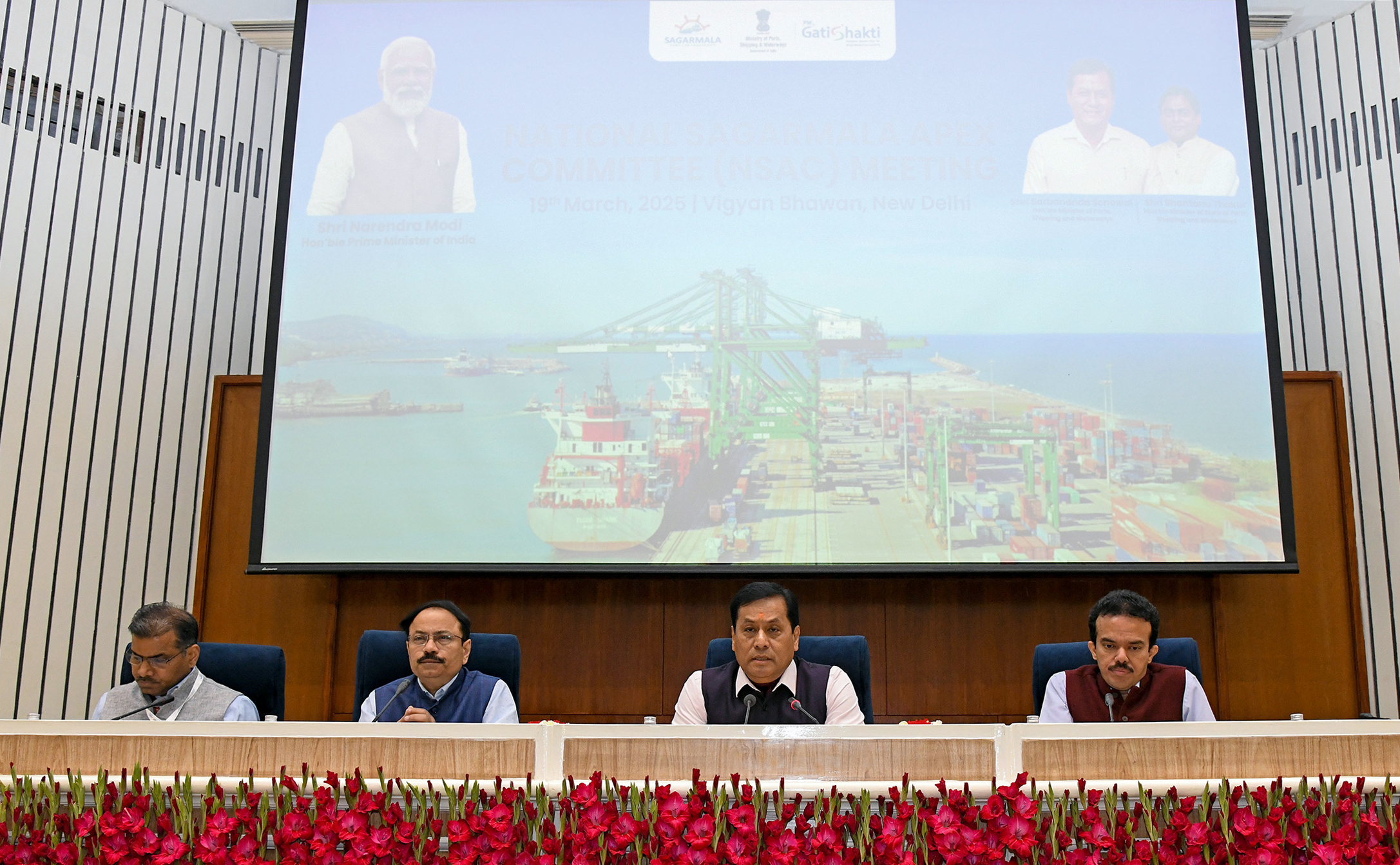
Prime Minister Narendra Modi has emphasised that India’s future growth will be anchored in the Blue Economy, combining economic prosperity with ecological sustainability and maritime strength. He said flagship programmes like Sagarmala, Deep Ocean Mission and Harit Sagar Guidelines are transforming how the country harnesses its vast ocean resources, empowering coastal communities and reinforcing India’s leadership in global ocean governance.
Responding to a detailed article shared by Union Minister of State Jitendra Singh, the Prime Minister noted that India’s 11,098 km-long coastline and a 2.4 million sq km Exclusive Economic Zone position the country to build a $100 billion growth engine. The Blue Economy, he stressed, is not limited to traditional sectors but extends to emerging fields such as deep-sea exploration, sustainable fisheries, eco-tourism and marine biotechnology.
Singh highlighted key initiatives including the Deep Ocean Mission, which is deploying the Matsya submersible to explore seabeds for resources and technology development, and the Sagarmala Programme that is modernising India’s ports to boost trade competitiveness. The Pradhan Mantri Matsya Sampada Yojana (PMMSY), he added, has triggered a “Blue Revolution” by lifting India’s fish production to 195 lakh tonnes in 2024-25, making the nation the second-largest fish producer globally.
Fisheries exports have also surged, from ₹46,662.85 crore in 2019-20 to ₹60,524.89 crore in 2023-24. Employment generation has exceeded expectations, with 58 lakh jobs created under PMMSY, including significant opportunities for women. The scheme has supported over 99,000 women entrepreneurs, with financial assistance for projects in areas such as seaweed farming and post-harvest infrastructure.
For the Andaman and Nicobar Islands, the Blue Economy vision carries special significance. Surrounded entirely by the sea and strategically located at the crossroads of major shipping lanes, the islands are uniquely placed to serve as both beneficiaries and drivers of this transformation. The pristine waters offer immense potential for expanding sustainable fisheries, seaweed cultivation, and pearl farming, while also presenting opportunities for eco-tourism that aligns with environmental preservation.
The islands are already seeing fisheries emerge as a major livelihood source. With the Centre prioritising women’s empowerment under PMMSY, Mahila Mandals and self-help groups in Andaman and Nicobar can expand their role in marine-based enterprises. Eco-friendly tourism models, such as community-led homestays and guided marine experiences, could further integrate local communities into the Blue Economy framework.
The region’s location also makes it pivotal for India’s security and maritime governance. Deep Ocean Mission projects could position the islands as hubs for ocean research, while Sagarmala-linked port modernisation can enhance trade efficiency in the Bay of Bengal and the wider Indo-Pacific.
The Prime Minister underscored that Blue Economy 2.0 is about more than economic output, it is about empowering people, creating sustainable livelihoods, and protecting fragile ecosystems. In this context, the Andaman and Nicobar Islands exemplify the balance of opportunity and responsibility, offering a test case for how India can grow while safeguarding its marine heritage.
With record fish production, rising exports, and the promise of new technologies, India’s Blue Economy is being pitched as a central pillar of the nation’s growth story. For Andaman and Nicobar, the moment may well mark the beginning of a deeper integration into India’s maritime future.