India’s national language AI platform BHASHINI has shifted from rule-based systems to AI-powered engines, enhancing accessibility and inclusivity across the country, senior government officials said. The platform is designed to provide comprehensive language services to all citizens and advance full societal inclusivity.
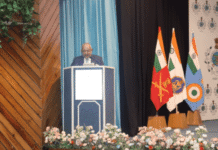
The Digital India BHASHINI Division under the Ministry of Electronics and IT (MeitY) organized the workshop BHASHINI Samudaye: Strengthening India’s Language AI Ecosystem in collaboration with Wadhwani AI. The event aimed to consolidate the country’s language AI ecosystem through participatory governance, collaborative engagement, and shared ownership of public digital infrastructure.
Amitabh Nag, CEO of the Digital India BHASHINI Division, said the initiative focuses on creating a “living ecosystem” involving data creators, annotators, translators, developers, users, and government entities working together to co-develop language technologies with shared value and responsibility.

Professor Girish Nath Jha of Jawaharlal Nehru University’s School of Sanskrit and Indic Studies emphasized that BHASHINI demonstrates the importance of structured dataset creation, domain-specific accuracy, and active community participation. He added that this approach is critical for AI systems that reflect India’s linguistic diversity and societal needs.
The workshop brought together language experts, academic institutions, civil society organizations, and industry stakeholders to examine practical use cases and explore ways to co-create, govern, and scale language AI solutions under the National Language Translation Mission (NLTM). Discussions also highlighted the challenges posed by Dravidian languages, which often lack Sanskrit equivalents, underscoring the need for expanded datasets and continued collaboration.
Shobha L., Member Research Staff at the AU-KBC Research Centre, noted that BHASHINI’s translation framework is comprehensive, covering sentence-level, discourse-level, and conversational translation across all 22 scheduled languages, as well as non-scheduled languages and dialects. She added that the platform ensures no language is left behind, addressing the digital divide in linguistic accessibility.
In addition to platform advancements, BHASHINI, in collaboration with the Gates Foundation and implemented by Civic Data Lab, launched the Dataset Onboarding Supporting Team (DOST). The initiative supports the systematic identification, preparation, and onboarding of high-value datasets into BHASHINI and AI Kosh, further enhancing the platform’s capabilities and reach.

Officials emphasized that the BHASHINI ecosystem relies on collective participation and collaboration across sectors to create AI-driven language solutions that are accurate, inclusive, and reflective of India’s cultural and linguistic diversity.
The platform’s expansion is expected to strengthen India’s digital infrastructure for language translation and communication, enabling citizens, government agencies, and businesses to access AI-powered tools that bridge linguistic barriers. The initiative is positioned as a key step in supporting the government’s broader vision for an inclusive digital society, where technology serves all citizens equitably.
With the growth of AI and digital language services, BHASHINI represents a model for integrating linguistic diversity into technological frameworks, ensuring that the country’s 22 scheduled languages, regional dialects, and non-scheduled languages benefit from advancements in AI-driven translation and communication services.