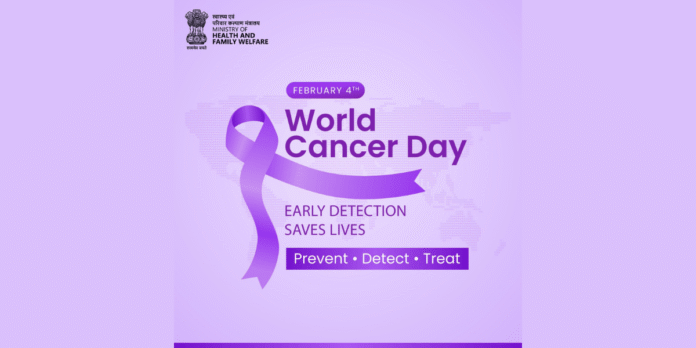
Ayushman Arogya Mandirs are playing a key role in India’s fight against cancer, Union Health Minister JP Nadda said on World Cancer Day, Wednesday.
World Cancer Day, observed annually on February 4, aims to raise awareness about cancer and highlight advancements in prevention, early detection, and treatment.
According to the Indian Council of Medical Research’s National Cancer Registry, India reported over 15.3 lakh new cancer cases in 2024 and approximately 8–8.7 lakh deaths, compared with a global burden of 20 million new cases and 9.7 million deaths in 2022.
Taking to the social media platform X, Nadda emphasized the importance of early detection and regular screenings, noting steps taken by the government to improve access to cancer care.
He highlighted the waiver of customs duty on 17 cancer drugs in the recent Union Budget, aimed at making essential medicines more affordable for patients.

“Under the leadership of Prime Minister Narendra Modi, several initiatives have been introduced to strengthen cancer care in India. The establishment of Cancer Day Care units in every district and the exemption of customs duties on critical cancer medicines will provide significant relief to patients. Ayushman Arogya Mandirs are also supporting the fight against cancer through large-scale screenings, enabling early detection and timely treatment across the country,” Nadda said.
The minister added that World Cancer Day serves as a reminder to promote awareness about prevention, early detection, timely treatment, and support for survivors.
Welcoming the customs duty waiver, experts stressed the need for translating increased health investments into robust cancer care systems. Amit Kumar Ghosh, Additional Chief Secretary, Medical Health & Family Welfare, Uttar Pradesh, noted that India’s health sector is at a defining moment, with the Union Health Budget crossing Rs 1 lakh crore for the first time.

Ghosh said initiatives such as Ayushman Bharat, population-based screening, new cancer institutes, and planned cancer day-care centres focus on early detection, timely referral, and affordable treatment. He added that stronger public–private collaboration and patient-centric policies will be critical to reaching underserved populations.
Dr Shyam Aggarwal, Chairman of Medical Oncology at a Delhi-based hospital, highlighted the role of advanced technology in cancer care. He noted that deep sequencing of DNA genes, enabling treatment decisions based on ctDNA results, represents the future of oncology and is becoming routine in other countries.
“These technological advancements will allow detection of tumors smaller than 5mm and improve treatment precision. Labs and researchers must adopt these technologies to ensure India keeps pace with global standards,” Aggarwal said.
The combination of early detection, affordable medicine, and technology-driven interventions underscores India’s ongoing efforts to strengthen cancer care and reduce the disease burden nationwide.