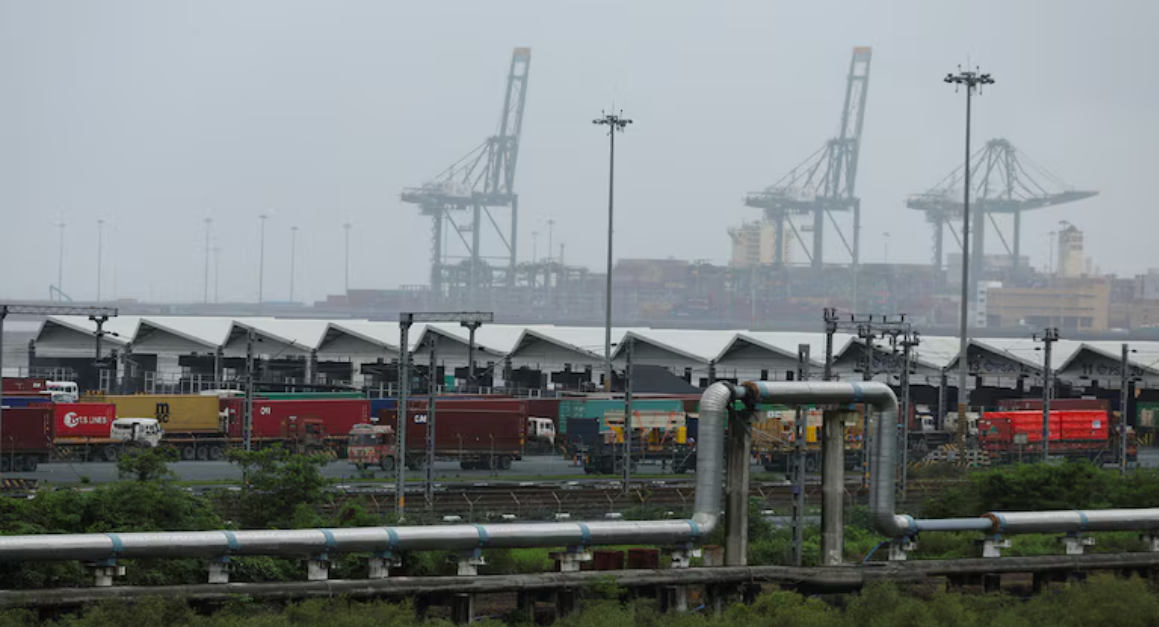
Source MoneyControl: The Centre’s decision to proceed with a deep-water dry bulk transhipment port at Atlanta Bay in North Andaman is expected to significantly enhance the strategic and commercial importance of the Andaman and Nicobar Islands, positioning the archipelago as a key pillar of India’s Bay of Bengal strategy, defence and maritime experts have said.
According to a report by Moneycontrol, the Atlanta Bay port project, announced in October and currently undergoing a techno-commercial feasibility study, is being closely supervised by Andaman and Nicobar Islands Lieutenant Governor Admiral D.K. Joshi (Retd), a former Chief of the Naval Staff. The direct involvement of a senior naval veteran highlights the strategic weight New Delhi is placing on the project amid increasing competition in the Indian Ocean region.
Sources indicated that Prime Minister Narendra Modi is expected to visit the Andaman and Nicobar Islands later this month, during which he is likely to review the progress of both the proposed Atlanta Bay port in North Andaman and the Galathea Bay international transhipment hub in Great Nicobar, along with other key defence and strategic assets across the island chain.

The Atlanta Bay port has been designed to accommodate some of the world’s largest dry-bulk vessels, including Capesize ships with capacities of up to 200,000 tonnes. Once operational, it is projected to have the longest continuous berth in India, a capability not currently available at any existing Indian port. While officially envisaged as a commercial facility focused on handling dry-bulk cargo such as coal, minerals and industrial raw materials, defence analysts note that infrastructure of this scale also carries substantial strategic implications.
Experts say a deep-water port at North Andaman would be able to support naval and coast guard operations by enabling large vessels to refuel, resupply and remain operational close to major international shipping lanes for extended periods. The region lies near sea routes that handle a significant share of global trade and a majority of East Asia’s oil and gas imports, making it a critical observation and operational point in the Bay of Bengal.
Commodore (Retd) Uday Bhaskar, Director of the Society for Policy Studies, said the Andaman and Nicobar Islands have long remained underdeveloped despite their strategic location. He noted that the islands sit close to vital maritime corridors linking the Malacca Strait and the Bay of Bengal, but lacked sustained investment for decades.
Bhaskar said the islands already host India’s only tri-service command, along with naval bases, airfields and advanced surveillance systems. The addition of a large port at Atlanta Bay would strengthen this existing military and logistical network by easing the movement of troops, equipment and supplies, while enabling ships to stay deployed in the region for longer durations.
He added that the scale of the Atlanta Bay project reflects a shift in India’s strategic outlook. Ports capable of handling 200,000-tonne vessels are rare globally, and India currently lacks comparable infrastructure. Such investments, he said, are essential if the country aims to build a strong ocean-based trade system aligned with its broader economic ambitions.

India’s push to develop port infrastructure in the Andaman and Nicobar Islands also comes amid China’s expanding presence in the Bay of Bengal. Beijing has invested heavily in port facilities in Bangladesh, including Chattogram and Mongla, both of which analysts say have potential dual-use implications. The reported access granted to Pakistan at Mongla has further heightened strategic concerns in New Delhi.
Atlanta Bay is being developed alongside the larger container transhipment port planned at Galathea Bay in Great Nicobar. While Galathea Bay is aimed at capturing global container traffic currently routed through foreign hubs such as Singapore and Colombo, Atlanta Bay will primarily handle dry-bulk cargo. Together, the two ports are expected to anchor India’s maritime infrastructure at both ends of the Andaman and Nicobar archipelago.
Experts said the projects are likely to reduce India’s dependence on foreign transhipment hubs while reinforcing the country’s maritime presence and security posture in the Bay of Bengal.