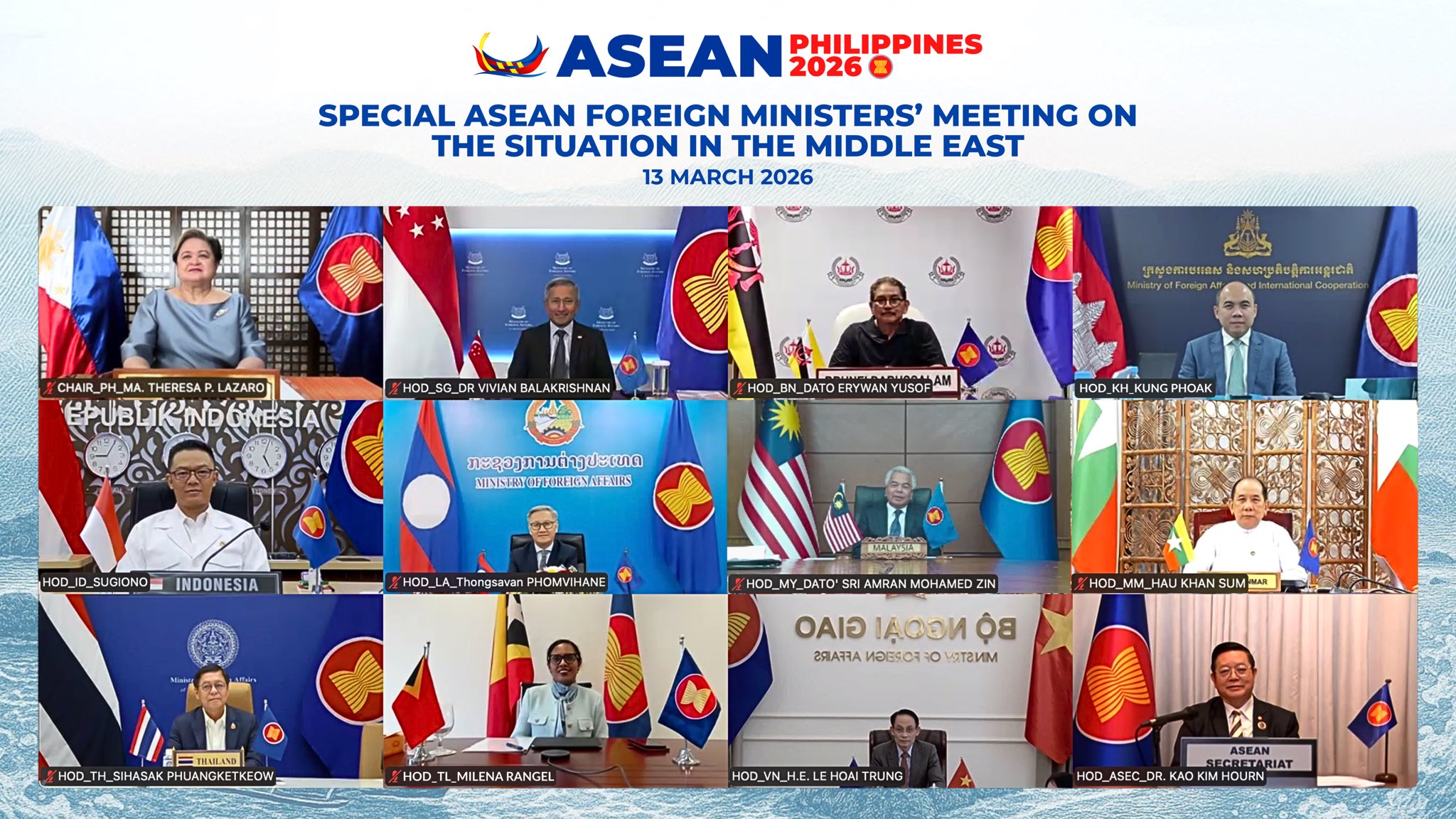
The foreign ministers of the Association of Southeast Asian Nations (ASEAN) have urged an immediate halt to hostilities in the Middle East, emphasizing the need for diplomacy, dialogue, and self-restraint to maintain regional peace and stability. The call came during a special virtual meeting convened by the Philippines, the current ASEAN Chair, to assess the escalating conflict and its implications for member states.
The ministers expressed serious concern over recent attacks carried out by Israel and the United States against Iran on February 28, 2026, followed by Israeli strikes on Lebanon and retaliatory actions by Iran targeting multiple countries, including Bahrain, Jordan, Iraq, Kuwait, Oman, Qatar, Saudi Arabia, Syria, and the United Arab Emirates. They warned that the escalation endangers civilian lives and threatens regional and global stability.

ASEAN underscored the obligation of all parties to respect international law, including the UN Charter, and to protect civilians and civilian infrastructure during armed conflicts. The ministers reiterated the importance of adhering to relevant UN Security Council resolutions while urging restraint to prevent further destabilization.
The discussion also addressed the conflict’s economic impact, particularly on energy markets, maritime routes, and air transport. Ministers stressed the need to ensure stable, open, and reliable energy and supply chains, minimizing disruptions to essential goods, including food. They highlighted the importance of regional coordination and policy integration to strengthen economic resilience and maintain macroeconomic and financial stability across ASEAN.
The meeting emphasized the value of ASEAN solidarity, calling for enhanced regional connectivity and collaboration on energy preparedness. Ministers encouraged diversification of energy sources, including renewables and alternative energy, while reinforcing logistics and supply chain resilience to secure access to affordable essential goods for the population.
The ministers highlighted that regional cooperation is essential to mitigate spillover effects from external economic shocks and ensure continuity in critical sectors, including finance, trade, and transport. They stressed that these measures are vital to safeguard the livelihoods and well-being of people across ASEAN member states.

ASEAN was established in August 1967 with the signing of the Bangkok Declaration by Indonesia, Malaysia, Philippines, Singapore, and Thailand. Over the years, the bloc expanded to include Brunei Darussalam (1984), Vietnam (1995), Laos and Myanmar (1997), Cambodia (1999), and Timor-Leste in 2025, forming today’s 11-member regional grouping.
The ministers concluded that coordinated diplomatic engagement, adherence to international law, and strengthened economic and energy cooperation remain crucial to maintaining stability in the region and mitigating the humanitarian and economic impact of the ongoing Middle East conflict.