The ongoing Special Intensive Revision of the electoral roll in the Andaman and Nicobar Islands has reached its final stage, with the enumeration phase scheduled to conclude on December 11. With one day remaining, the office of the Chief Electoral Officer released updated figures indicating that 66,028 electors have been classified under the uncollectable category, prompting a renewed appeal to electors and political parties to verify the entries before the cut-off date. The data reflects a significant portion of total enumeration forms distributed, accounting for 21.27 per cent of all forms issued across the islands.
According to the updated breakdown, 9,172 electors have been listed as deceased, while 30,172 electors fall under the untraceable or absent category, an indication of mobility trends and residential shifts that often affect remote island communities. Another 23,137 electors have been recorded as permanently shifted, reflecting longer-term relocation patterns. Additionally, 2,842 entries have been flagged as duplicates or already enrolled elsewhere, while 705 electors remain categorised under ‘others’ due to reasons that require further clarification. Officials stated that the purpose of compiling the uncollectable category is to ensure greater accuracy of the upcoming draft roll, scheduled for publication on December 16.
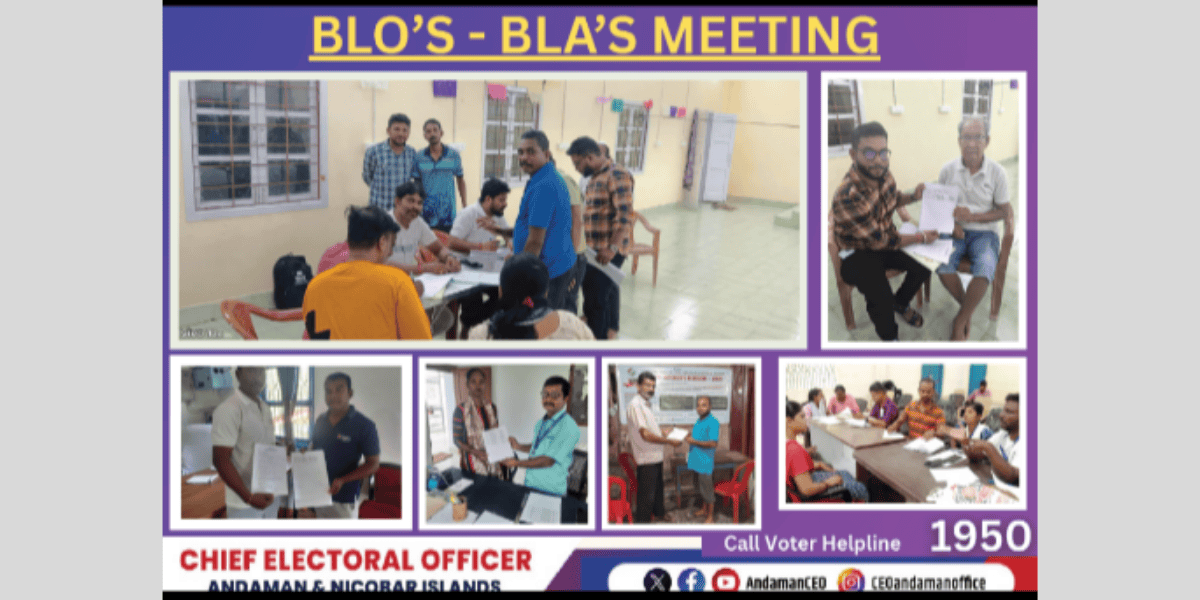
At the polling station level, Booth Level Officers have been conducting meetings with Booth Level Agents to share the uncollectable lists for cross-verification. The process, designed to strengthen transparency, allows political parties to examine entries flagged for removal or correction and inform the election machinery of any genuine electors who may have been incorrectly categorised. For polling stations without appointed BLAs, the uncollectable lists have been displayed publicly to ensure that residents have access to the information and can correct any discrepancies.

The CEO’s office also noted that photographs of BLO–BLA meetings, along with the uncollectable forms, will be uploaded on the CEO’s website and the respective district administration websites to widen access to the verification process. Officials emphasised that the multi-agency approach involving electors, political parties, and election staff aims to minimise errors in the draft roll and ensure that no eligible voter is left out due to procedural gaps or outdated information.
Meetings were also conducted by Electoral Registration Officers and Assistant Electoral Registration Officers with representatives of recognised political parties to further review the uncollectable entries. These interactions are considered a critical part of the verification cycle, ensuring that party representatives can provide inputs, especially in remote or sparsely populated areas where contact with electors may be limited.
The CEO has appealed to electors to verify the uncollectable lists and immediately contact Booth Level Officers or approach the AERO, ERO or District Election Office if they find their names incorrectly listed. The office has urged that any elector who is available or traceable must reach out before the December 11 deadline to ensure their name is included in the draft electoral roll. The CEO’s appeal also directed electors to utilise the 1950 helpline for clarifications or corrections related to their enumeration status.

Once the draft roll is published on December 16, citizens whose names are missing will be required to apply through Form-6 along with the mandatory declaration during the claims and objections period from December 16, 2025, to January 15, 2026. Officials said this timeline provides a second opportunity for eligible voters to ensure their inclusion before the final roll is published.
The CEO thanked electors, political parties and Booth Level Agents for their cooperation during the Special Intensive Revision process. As the enumeration phase draws to a close, election officials stressed the importance of community participation in maintaining an accurate and inclusive voter database, especially in a region where mobility patterns and dispersed settlements frequently challenge the upkeep of electoral records. The verification underway is expected to play a key role in shaping a cleaner and more reliable draft roll for the islands.