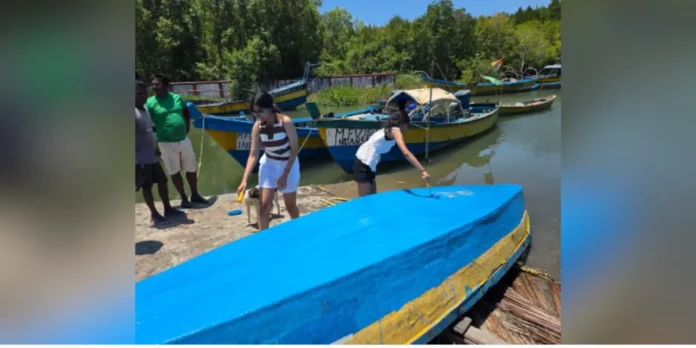
Sri Vijaya Puram (Port Blair) April 6: A community-driven fisheries initiative in the Andaman and Nicobar Islands has led to the restoration of traditional fishing vessels, with students from Bengaluru participating in a programme aimed at supporting local fishermen and strengthening livelihood assets.
The Department of Fisheries facilitated the programme at the Fish Landing Center in Guptapara, where 80 students from Gear International Innovative School undertook restoration work on non-motorised dinghies identified as belonging to economically vulnerable fishers.
Organised in collaboration with Discover Andaman Holidays Pvt. Ltd., the initiative focused on improving the operational condition of traditional boats used by local fishing communities. Three dinghies were selected for restoration and handed over to the students as part of the exercise.

Under the supervision of fisheries officials, including Assistant Fisheries Guard Nadeem, the students carried out cleaning, minor repairs, maintenance, and repainting of the vessels using marine-grade coatings. Officials also provided guidance on vessel upkeep and highlighted the importance of colour coding for identification, safety, and regulatory compliance within the fisheries sector.
The activity directly contributed to improving the usability of the boats, which are essential for the daily livelihoods of local fishermen. Beneficiaries noted that the restored vessels would support their fishing operations immediately, potentially enhancing their earning capacity.
Local fishermen actively engaged with the students during the process, sharing their experiences and challenges related to traditional fishing practices and sustaining livelihoods in the region. The interaction provided participants with practical insights into the socio-economic realities of coastal communities.
The programme received support from Guptapara Pradhan Durlabh Das, who acknowledged the effort as a meaningful example of collaboration between communities and students. He noted that such initiatives help address grassroots challenges while encouraging social responsibility among young participants.

Fisheries officials stated that the initiative reflects a broader approach to sustainable fisheries development, combining community participation with educational outreach. They emphasised that engaging students in such programmes helps build awareness about the importance of the fisheries sector and its contribution to local economies.
The initiative also highlights how structured community engagement can create tangible outcomes for vulnerable groups while fostering a sense of responsibility among youth. By aligning educational exposure with development goals, the programme demonstrates a model for collaborative interventions in coastal regions.
Authorities indicated that similar efforts could play a role in strengthening community resilience and promoting sustainable practices in the fisheries sector, particularly in regions dependent on traditional livelihoods.