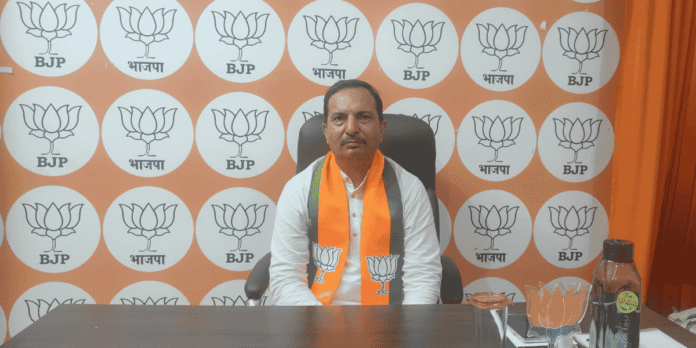
Amid intensifying student protests over the proposed transition from Pondicherry University affiliation to a deemed university framework in the Andaman and Nicobar Islands, state BJP chief Anil Tiwari has come under scrutiny for what party insiders describe as a “missing in action” moment.
Students across several higher education institutions in the islands have been agitating against the proposed shift, raising concerns over degree recognition, academic continuity and long-term credibility during the transition phase. Demonstrations have continued under harsh weather conditions, with reports that some students suffered health issues while protesting in the sun.
While the proposed deemed university model is understood to be part of a broader higher education reform initiative under Prime Minister Narendra Modi, aimed at granting greater autonomy to institutions in remote regions and making them more globally employability-focused, several local BJP leaders believe the state unit should have adopted a more visible and proactive stance.

Multiple BJP functionaries who spoke to The Wave Andaman on condition of anonymity expressed surprise and disappointment that the state BJP chief did not publicly engage with students or attempt to address their apprehensions. “This was a moment for outreach and reassurance,” said one senior party worker, adding that the state president could have acted as a bridge between the administration and the student fraternity.
Sources told The Wave Andaman that Tiwari is currently in Diglipur, accompanied by Raghunath Kulkarni, the party’s national prabhari for the islands. Their presence there, even as protests escalated elsewhere, has prompted quiet criticism within sections of the party.

Repeated attempts by The Wave Andaman to reach Anil Tiwari for comment were unsuccessful at the time of publication.
Political observers argue that in situations involving student unrest, particularly on issues linked to academic futures, visible engagement by senior political leadership can help de-escalate tensions and prevent misinformation from spreading. “When anxieties are high, silence is rarely neutral. It is often interpreted,” said one observer.
As student groups continue to demand clarity and written assurances regarding recognition and safeguards for currently enrolled batches, questions remain over whether the local political leadership will step in to directly engage with stakeholders and calm tempers across campuses.