The Directorate of Education of the Andaman and Nicobar Administration has conducted a five-day hands-on training programme aimed at strengthening the practical competencies of laboratory assistants and laboratory attendants working in government schools across the Islands .
Organised by the Science Wing of the Directorate of Education, the training programme was held from December 8 to 12 at three venues in Sri Vijaya Puram: Government Model Senior Secondary School, Aberdeen; Government Boys’ Senior Secondary School, Middle Point; and Government RBV Senior Secondary School. A total of 97 laboratory assistants and laboratory attendants from various schools participated in the programme, reflecting the scale of the initiative.
The primary objective of the training was to improve the efficiency and technical proficiency of laboratory support staff responsible for conducting and assisting science experiments for Classes IX to XII. With practical science forming a critical component of the secondary and higher secondary curriculum, the role of laboratory personnel is considered central to effective classroom learning.

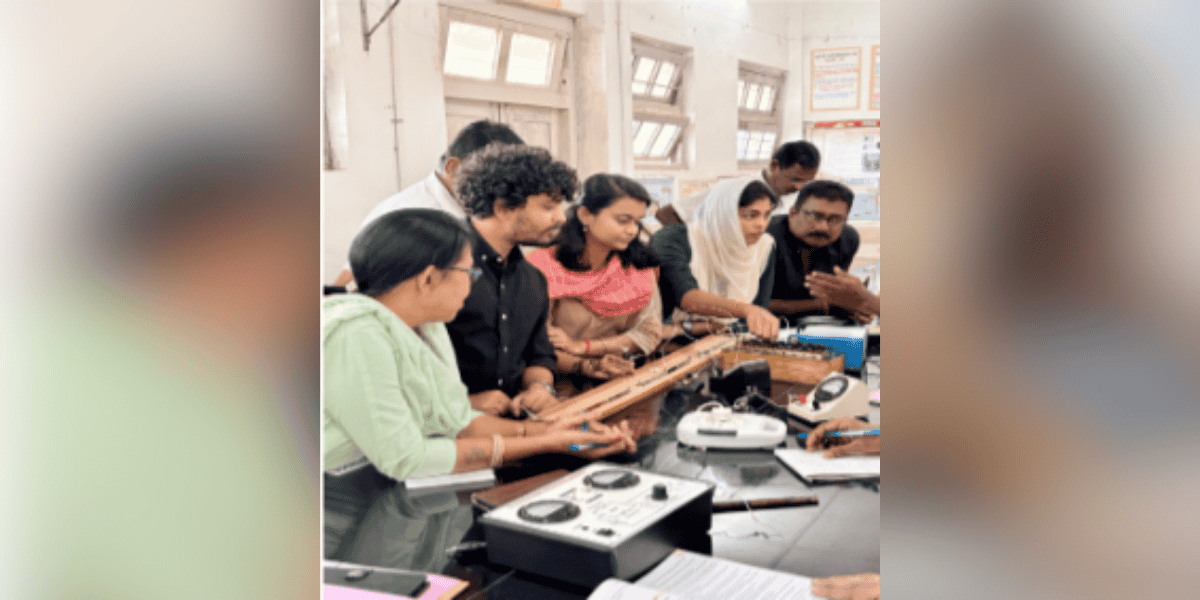
During the programme, participants were trained in identifying and handling laboratory articles, setting up experimental apparatus and conducting hands-on experiments in physics, chemistry and biology. Sessions also covered repair and maintenance of laboratory materials, upkeep of stock registers and adherence to safety protocols while handling scientific equipment.
Subject teachers from the host schools, including postgraduate teachers in physics, chemistry and biology, facilitated the sessions along with resource persons from the Industrial Training Institute at Dollygunj. The involvement of technical experts was aimed at bridging gaps between theoretical knowledge and practical application, particularly in maintaining equipment and troubleshooting common laboratory issues.
Midway through the programme, the Director of Education interacted with the participants, highlighting the importance of continuous skill upgradation among laboratory staff. The interaction focused on motivating participants to make full use of the training and apply the learning outcomes in their respective schools to improve the quality of practical science education.
The programme concluded with an assessment test designed to evaluate the effectiveness of the training and gauge participants’ understanding of laboratory procedures and safety norms. Feedback was also collected from attendees to assess areas for improvement and identify future training needs.
Certificates were distributed to all participants on completion of the programme, marking the formal conclusion of the training. The organisers indicated that similar capacity-building initiatives are part of ongoing efforts to strengthen science education infrastructure and support systems in government schools.

Laboratory assistants and attendants play a critical yet often understated role in the education ecosystem, ensuring that experiments are conducted safely and equipment is maintained in working condition. In remote and resource-constrained regions such as the Andaman and Nicobar Islands, their efficiency directly impacts students’ exposure to practical learning.
The training programme reflects an institutional focus on improving learning outcomes by investing in support staff, alongside teachers and academic administrators. By standardising laboratory practices and reinforcing safety and maintenance protocols, the Directorate of Education aims to create a more conducive environment for hands-on science learning.
As schools prepare for upcoming academic sessions and practical examinations, the upgraded skill sets of laboratory personnel are expected to contribute to smoother conduct of experiments and improved student engagement with science subjects.