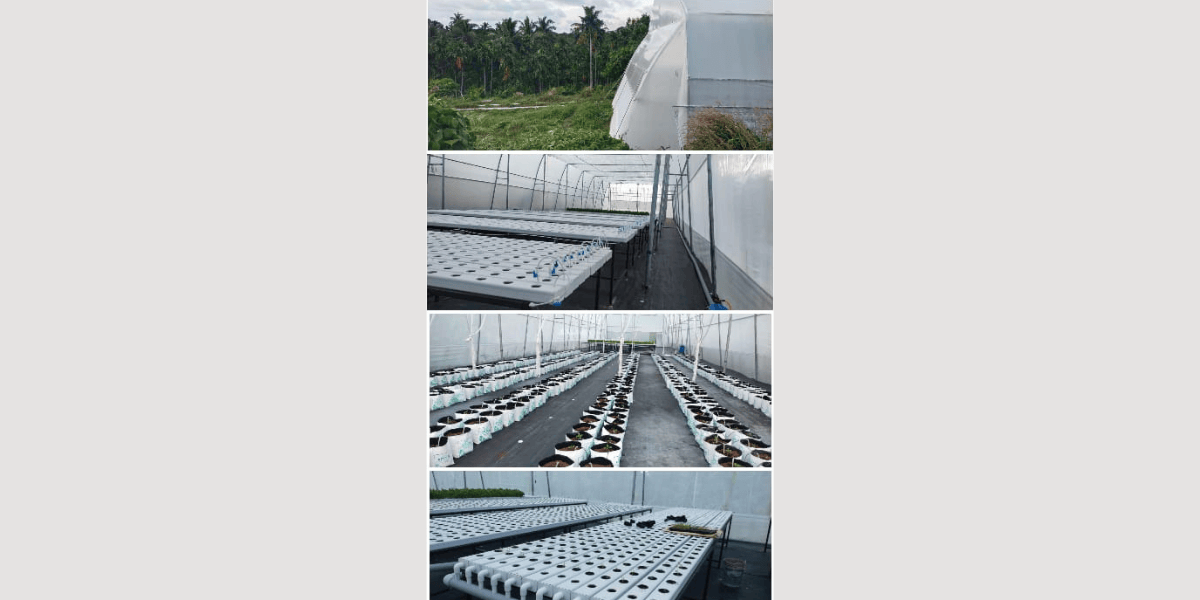
The Andaman and Nicobar Islands achieved a landmark in local agriculture with the successful harvest from the first hydroponic farming unit in the archipelago. Established at Kalapathar, Swaraj Dweep (Havelock Island), the initiative introduces high-tech, soil-free cultivation tailored for the unique ecological and logistical conditions of the islands.
The project was initiated by Himmat Singh, a retired civil servant with expertise in agricultural development. Designed as a proof-of-concept, the hydroponic unit aims to demonstrate how modern farming technologies can be adapted to island conditions rather than being confined to mainland applications. Sanjay Balan and Johnny contributed to the project from its formative stages, ensuring site selection, land preparation, and practical operational planning.
The first trial crop, exotic spinach, has been successfully harvested, marking the operational validation of the system. Trials for zucchini, lettuce, and bell peppers are already underway. These crops are in high demand locally but have historically relied on mainland supply chains.

Hydroponics addresses multiple challenges faced by the islands. Despite abundant rainfall, the local soil is often unsuitable for intensive vegetable cultivation. Residents, hotels, and tourists rely on air-lifted produce, which comes with higher costs, reduced freshness, post-harvest losses, and a larger carbon footprint. The hydroponic system mitigates these issues by growing plants in a controlled, soil-free environment with precise nutrient management, reducing pesticide use and optimising water efficiency.
The first harvest occurred early morning and reached Port Blair by midday without cold-chain support, highlighting the freshness and quality of hydroponically grown produce. A small batch was shared with the local community to gather feedback on taste, texture, and culinary suitability, emphasizing consumer acceptance as part of the pilot program.
Beyond food security, hydroponics offers nutritional, environmental, and economic benefits. Plants receive exact nutrient levels, improving quality and nutrient uptake while avoiding chemical overuse that can harm soil and water. The technology also presents livelihood opportunities, offering employment and higher income potential for small and marginal farmers through controlled, high-value cultivation.

Himmat Singh noted that the project’s success is due to domain knowledge and hands-on involvement by a small team. For hydroponics to scale in the islands, sustained support, training, and facilitation from local administration are critical. This includes technical guidance, pilot programs, skill development, and integration with existing agricultural schemes rather than reliance solely on subsidies.
The Swaraj Dweep hydroponic unit sets a precedent for island agriculture, showing that high-quality, fresh produce can be grown locally, reducing dependence on mainland imports and aligning economic resilience with environmental sustainability. The initiative marks a pivotal step in rethinking food security strategies in island territories and suggests that the future of agriculture in Andaman and Nicobar can be both innovative and locally sustainable.