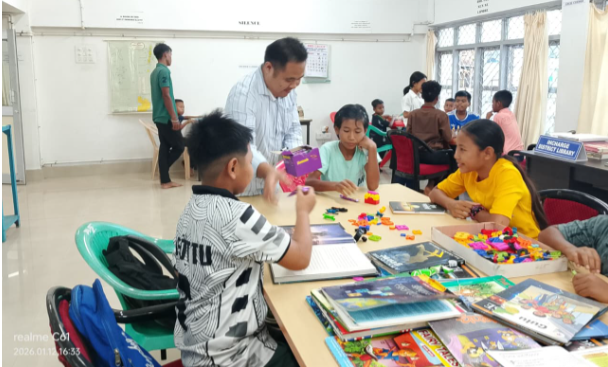
The Directorate of Education has undertaken a series of initiatives to strengthen district and zonal libraries across the Andaman and Nicobar Islands, positioning them as active centres for learning and overall student development while encouraging reading habits among the wider community. At present, the education department operates two district libraries and 18 zonal libraries across the islands, which are being gradually transformed to serve a broader educational and social role.
The Director of Education has emphasised that libraries should move beyond their conventional role as book-lending facilities and function as inclusive spaces that support creativity, curiosity and positive engagement among students. In line with this approach, several measures have been introduced to improve infrastructure, expand collections and increase student participation, particularly outside regular school hours.
One of the key interventions has been the addition of a large number of children’s books to library collections. This expansion has contributed to a visible increase in student footfall, especially during evening hours, weekends and school holidays. Libraries have reported that younger readers are increasingly using these spaces for leisure reading and academic support, reflecting a renewed interest in print material.
To further enhance student engagement, the department has introduced activity-based learning spaces within libraries. Separate art and craft corners have been created to allow students to explore creative pursuits, while chess corners have been set up to encourage strategic thinking and sustained concentration. These additions have enabled students to spend more time within library premises in a structured and constructive environment, reducing dependence on mobile phones and other digital distractions.
Another initiative aimed at drawing students into libraries is the regular screening of children’s motivational movies. These screenings are held every Sunday evening and have attracted considerable participation across locations. The District Library at Car Nicobar has witnessed a notable increase in attendance during these sessions, with students regularly gathering for the screenings as part of their weekend routine.
To improve visibility and awareness, large display boards have been installed at district and zonal libraries, clearly outlining available facilities, timings and activities. The move is intended to make libraries more accessible to first-time visitors and inform parents and students about the range of services offered beyond book lending.
In addition to infrastructure and collections, the Directorate has introduced regular competitions such as art and craft, reading and storytelling events. These activities are designed to encourage creativity, improve communication skills and build confidence among students. Participation in such competitions has increased steadily, according to the department, contributing to a more vibrant library environment.
Operational changes have also been implemented to make libraries more accessible. All district and zonal libraries will now remain open on Sundays, with Monday designated as the weekly off. Working hours have been standardised from 11 am to 7 pm, allowing students and members of the public to visit libraries after school or work hours.
The department has stated that these combined initiatives have significantly strengthened the role of libraries as community learning spaces. Libraries are now being developed as centres that support academic growth, creative expression and positive social interaction. Parents have been encouraged to bring their children to libraries and make use of the facilities so that students spend more time in constructive and educational activities.
The effort reflects a broader emphasis on fostering reading habits and lifelong learning while providing students with safe and engaging spaces outside the classroom. With continued improvements and sustained participation, district and zonal libraries are expected to play an increasingly central role in the educational ecosystem of the Andaman and Nicobar Islands.