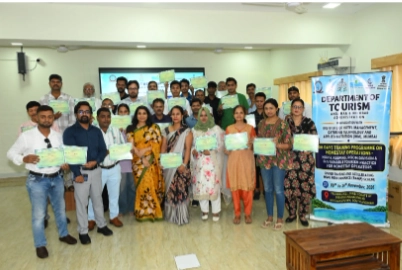
Sri Vijaya Puram, November 16: Improving hospitality standards, reducing the environmental footprint of tourism and strengthening the digital presence of local accommodation businesses formed the focus of a six-day training programme for homestay operators in the Andaman and Nicobar Islands, which concluded on November 14. The initiative covered hotel operations, sustainable tourism practices and digital marketing to help local operators manage their businesses and attract visitors independently.
The Directorate of Tourism, Andaman and Nicobar Administration, organised the programme in association with the Institute of Hotel Management, Catering Technology and Applied Nutrition (IHM), Mumbai, under the Raising and Accelerating MSME Performance (RAMP) Scheme. The training ran from November 9 to 14 at the Training Hall of the Directorate of Disaster Management.

Conducted by Chandrokala Biswas, the programme sought to improve the operational, managerial and entrepreneurial skills of homestay owners and other tourism stakeholders. Its curriculum combined practical exercises with case-based learning on hospitality services and rooms division management.
Participants received training in guest services, front office procedures, reservation handling, housekeeping, room preparation and inspection. The sessions also addressed hygiene, sanitation, linen maintenance, pest control and guest safety, with attention to requirements arising from the islands’ tropical conditions.
Environmental management formed another major component, with the training introducing measures to reduce the ecological impact of homestay operations. These included conserving water and energy, segregating waste, eliminating single-use plastics and adopting environmentally safe cleaning products.
The programme also addressed the ecological sensitivity of the islands, particularly their coral reefs, mangroves and coastal biodiversity. Participants were sensitised to the importance of communicating conservation concerns to visitors and encouraging responsible travel practices.
Beyond accommodation management, the training examined ways to improve the commercial visibility of local homestays and reduce dependence on third-party online travel agencies. Participants learned about digital marketing, brand development and the use of Instagram and other social media platforms to promote their businesses.
The sessions also covered the development of tourism packages centred on local cuisine and culture, supported by photography and short-form videos. Operators received practical guidance on responding to guest enquiries, improving booking conversions and providing personalised services through effective communication and complaint resolution.
The programme concluded with a valedictory session at the training venue, marking the completion of the capacity-building initiative.