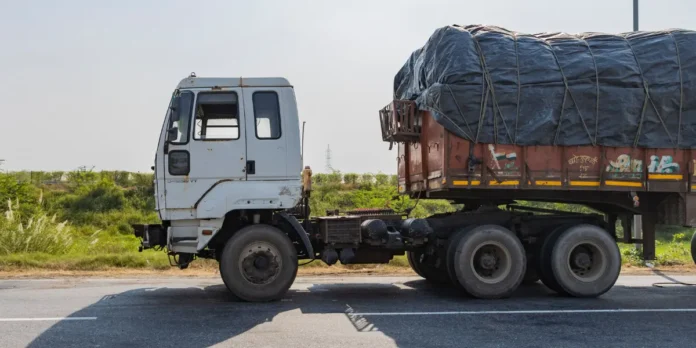
Sri Vijaya Puram, Aug. 28: The Andaman and Nicobar Administration has ordered owners, operators and drivers of heavy goods vehicles transporting containers and heavy cargo to ensure every load is properly secured before a journey, citing risks to road users, property and human life from shifting or detached cargo.
The directions cover vehicles carrying containers as well as heavy machinery, steel products, pipes, timber, construction materials and other heavy goods. The Administration said improperly secured loads can shift, topple or become detached while a vehicle is in transit, potentially causing road accidents and damage to public and private property.
The move carries particular significance for the Islands’ road network, which includes narrow carriageways, steep gradients, winding stretches, sharp curves and hilly terrain. Frequent rainfall and slippery road surfaces can further increase the risk of inadequately secured cargo moving or becoming unstable during transportation.
Under the directions issued under the Motor Vehicles Act, 1988, every heavy goods vehicle must hold a valid Certificate of Fitness and remain in a safe and roadworthy condition.

Containers must be positioned correctly on the vehicle and secured with twist-locks. The securing arrangement must comply with AIS-093, while twist-locks must meet the requirements specified in IS: 7622. Drivers and operators must ensure that the locks are fully engaged and inspect them before beginning each journey.
Where necessary, operators must use additional suitably rated securing mechanisms, including lashing chains, bars, rods and webbing. Heavy machinery, steel products, pipes, timber, construction materials and other heavy goods must likewise be restrained using suitable chains, wire ropes, webbing straps, binders, lashings or other approved load-restraint devices of adequate strength.
The Administration has also directed operators to distribute cargo uniformly so that the vehicle retains stability and proper steering and braking characteristics. Loads must be restrained against shifting, rolling, sliding, tilting or falling during transit.
The Gross Vehicle Weight and overall dimensions of the vehicle must remain within the limits prescribed under the Motor Vehicles Act, its rules and notifications issued under the law.
Drivers and operators must check all locks, fastening arrangements and securing devices before starting a journey. The pre-trip inspection must establish that the equipment is properly fitted, adequately tightened and in good working condition.

The Administration has advised vehicle owners, transport operators, logistics agencies and other stakeholders to comply strictly with the Motor Vehicles Act and related rules. Any violation detected during enforcement will be dealt with under the applicable legal provisions.
Failure to comply with the directions will attract penalty under Section 86 of the Motor Vehicles Act.
The Enforcement Wing of the Transport Department and the Police Department have been tasked with ensuring compliance through routine checks and enforcement drives. The directions place responsibility on vehicle owners, operators and drivers to verify the condition and securing of cargo before every trip.