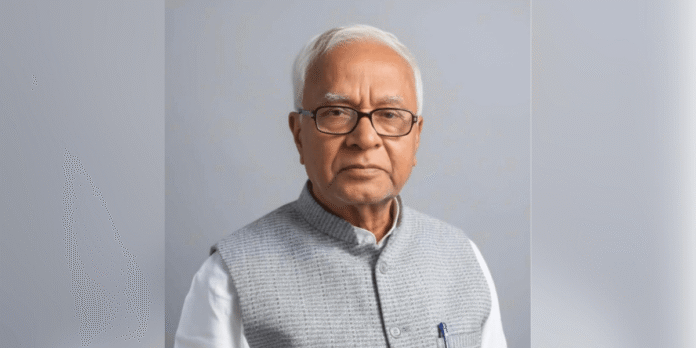
Sri Vijaya Puram, Aug 22: Days after The Wave Andaman highlighted the sharp decline in air connectivity and the cascading economic impact of soaring airfares on the Andaman and Nicobar Islands, Member of Parliament Bishnu Pada Ray has taken up the matter with the Union Ministry of Civil Aviation, seeking an urgent high-level stakeholder meeting to address the crisis.
Ray has urged Union Civil Aviation Minister K. Rammohan Naidu to convene a meeting involving the Ministry of Civil Aviation, Ministry of Home Affairs and Defence authorities, the Andaman and Nicobar Administration, airlines operating to and from the islands, the Andaman Chamber of Commerce & Industry, tourism and business representatives and other stakeholders.
The intervention comes after The Wave Andaman reported concerns raised by representatives from the tourism, fisheries, hospitality, transport and business sectors over the steep reduction in flights and resulting increase in airfares.
During an exclusive interaction with The Wave Andaman, Jadwet, President of the Ship Owners Association; Simson, representing the Andaman and Nicobar Tour Operators Association; Rafiq, representing the Andaman Association of Tour Operators; Maheshwar Rao, Chairman of the Andaman and Nicobar Fisheries Federation; Hema Raju, General Secretary of the Fishermen Welfare Association; Chandrashekar, President of the Andaman Chamber of Commerce; and Madan Lall, hotelier and General Secretary of the Andaman Chamber of Commerce had called for urgent intervention and a common delegation involving the Administration, Civil Aviation Ministry, airlines and island stakeholders.
Ray’s intervention now takes that demand to the Union government.

Flights down nearly 50 per cent
Around 62 flights per week were operating to and from Veer Savarkar International Airport, Sri Vijaya Puram, during July 2025, while the number rose to approximately 72 flights per week in August 2025.
During the corresponding period in 2026, the figure has fallen to around 36 flights per week, representing a decline of nearly 42–50 per cent.
The reduction in capacity has coincided with a sharp increase in airfares. One-way tickets between Sri Vijaya Puram and major mainland destinations such as Chennai, Kolkata and Delhi are frequently reaching ₹28,000 or more, depending on availability.
Ray has stressed that for the geographically isolated Andaman and Nicobar Islands, air connectivity cannot be treated merely as a commercial or tourism service.
Islanders depend on air services for medical treatment and emergencies, education, employment, business, tourism, essential supplies and the movement of passengers and time-sensitive cargo.
‘Air connectivity is an essential lifeline’
The concern was strongly echoed by Chandrashekar, President of the Andaman Chamber of Commerce, during his interaction with The Wave Andaman.
> “For Andaman, flights are not a luxury. They are a necessity. We are geographically separated from mainland India, and people depend on flights for business, medical emergencies, education and essential travel. Connectivity cannot be decided only on the basis of whether it is profitable for the airline during a particular season.”
The stakeholders have questioned whether airlines operating lucrative metropolitan routes such as Delhi, Mumbai and Chennai should also maintain a reasonable and assured level of connectivity to strategically important smaller destinations, including the Andaman and Nicobar Islands.
They have argued that the geographical and strategic circumstances of the islands require a minimum level of year-round connectivity.
Tourism caught in a vicious cycle
The tourism industry has been among the sectors most immediately affected by the reduction in flights and increase in fares.
The ecosystem extends from tour operators and hotels to transport providers, ferry operators, water-sports and adventure activity operators, guides and local retailers.
Simson, representing the Andaman and Nicobar Tour Operators Association, said island-based operators are particularly vulnerable because much of their business functions through a business-to-business (B2B) model.
> “The tour operators here are largely B2B operators. We are connected to travel agents and businesses outside the islands, and our entire business depends on the tourist actually reaching Andaman. When flights are curtailed and fares become exorbitant, the bookings are affected first. We are unable to sustain the business, and the losses eventually pass down to everyone working with us.”
The stakeholders have pointed to a vicious cycle in which fewer flights lead to higher fares, higher fares discourage tourists, fewer tourists reduce business activity and declining demand can subsequently be used to justify further flight curtailment.
Ray has also raised concern over the effect of declining tourist arrivals on businesses, employment and investments made in the sector.
Car operators face loan pressure
The impact is being felt by transport operators who have invested in vehicles to serve the tourism industry.
Rafiq, representing the Andaman Association of Tour Operators, highlighted the financial pressure facing car and tempo operators.“The car operators have taken loans to purchase their vehicles. When tourists don’t come, there are no bookings and there is no income. But the EMI does not stop. If they are unable to repay the loan, the bank can seize the vehicle. So the impact is not just a few days of lost business—it can threaten the livelihood and asset of the entire family.”
Many vehicle operators depend almost entirely on tourist bookings for their income. A prolonged decline in tourist movement could therefore leave them struggling with both reduced earnings and outstanding loan liabilities.
Hotels running with empty rooms
The hospitality industry is facing a similar squeeze.
Madan Lall, hotelier and General Secretary of the Andaman Chamber of Commerce, said the fall in tourist arrivals has left businesses carrying substantial fixed costs despite declining occupancy.
> “The rooms are there, the infrastructure is there and the employees are there, but the tourists are not coming. We have invested heavily in the hospitality sector, and when there is no tourist flow, rooms remain empty. Yet the expenses, salaries, maintenance and loan EMIs continue.”
The impact of low hotel occupancy extends to restaurants, transport providers, guides, activity operators and local shops that depend on hotel guests.
Fisheries exports hit by connectivity constraints
The crisis is also affecting the fisheries sector, particularly the movement of export-quality fish.
Around 10–25 tonnes of export-quality fish are transported from the islands towards mainland markets such as Chennai, Kolkata and Delhi for onward movement to larger and international markets.
Maheshwar Rao, Chairman of the Andaman and Nicobar Fisheries Federation, said timely transportation is critical because of the perishable nature of the commodity.
“Our export-quality fish depends on timely transportation. We send fish from Andaman to mainland markets such as Chennai, Kolkata and Delhi, from where it can move to bigger and international markets. When the air-cargo movement is affected, the fish cannot reach the market in time. Because it is a perishable commodity, the value falls and the loss ultimately comes back to the fishermen and the people involved in the trade.”
He said disruption in air-cargo movement affects the economic viability of fisheries exports and the incomes of those dependent on the sector.
Export-quality fish needs access to wider markets
Hema Raju, General Secretary of the Fishermen Welfare Association, highlighted the difference between fish meant for local consumption and export-quality fisheries.
“The fish that is consumed locally has a local market. But export-quality fish has a different market. It has to reach the bigger markets where it can get a fair price. If there is no air connectivity and no export movement, the market is effectively closed for that fish. The loss ultimately affects the fishermen and their families.”
Export-quality fisheries depend on reliable and timely transportation. Delays can result in deterioration, lower market realisation and financial losses.
The impact, therefore, extends from exporters to fishermen and their families.
Jadwet flags the cascading effect
Jadwet, President of the Ship Owners Association, said the impact of the flight crisis cannot be confined to aviation or tourism alone.
“The problem is not only about the passenger who is unable to get a flight. There is a cascading effect. When the tourist does not come, the tour operator suffers, then the hotel, the car operator, the ferry operator, the water-sports operator, the guide and even the local shopkeeper suffers. The entire ecosystem is connected to the movement of tourists.”
The interconnected nature of the island economy means disruption in one sector quickly affects multiple others.
Medical emergencies raise the stakes
The issue also has a direct bearing on medical emergencies.
Island residents requiring specialised treatment unavailable locally often have to travel to mainland India. When flight availability falls and fares rise, emergency travel becomes considerably more difficult.
In certain emergency cases, air evacuation can involve expenditure reportedly reaching ₹45–50 lakh.
Ray has stressed that dependable and affordable air connectivity is therefore directly linked to the safety and well-being of island residents.
MP had raised the issue earlier
Ray has previously taken up the issue with the Civil Aviation Ministry and discussed it with the Civil Aviation Minister in Parliament.
He submitted detailed communications on March 30, 2026, and April 8, 2026, proposing a special mainland-island connectivity framework to address recurring exorbitant airfares on mainland sectors.
The Andaman and Nicobar Administration subsequently took up the matter with the Ministry through letter No. 14/CA/2013/-141/151 dated July 5, 2026.
With the situation continuing, Ray has now sought an urgent high-level intervention.
Call for a common delegation
The proposed meeting would bring together the Ministry of Civil Aviation, Ministry of Home Affairs and Defence authorities, Andaman and Nicobar Administration, major airlines, Andaman Chamber of Commerce & Industry, tourism and business representatives and other concerned stakeholders.
The proposed delegation would examine flight schedules, passenger demand, airfare trends, cargo movement and the wider economic impact of flight curtailment.
Ray has sought consideration of a minimum assured year-round flight capacity, a review of sharp seasonal reductions, measures to prevent unreasonable airfare escalation, adequate air-cargo capacity, a dedicated mechanism for medical and emergency travel, periodic consultation with island stakeholders and a long-term air-connectivity policy suited to the Union Territory.

The intervention comes at a time when island stakeholders have been demanding that the distinction between “on-season” and “off-season” should not result in drastic reductions in connectivity.
They have argued that moderate fluctuations may be understandable due to weather or operational circumstances, but a reduction approaching 50 per cent is unacceptable for an island territory that depends heavily on air connectivity.
The issue has now moved from an industry concern to a wider policy demand, with stakeholders seeking a common platform to discuss the crisis and the MP formally pressing the Union government for intervention.
The central question remains whether connectivity to the Andaman and Nicobar Islands can be governed predominantly by seasonal commercial considerations when the same flights carry tourists, patients, essential supplies, cargo and sustain businesses and livelihoods.
For the island stakeholders and the MP, the demand is clear: air connectivity must be treated as an essential lifeline, with reliable year-round capacity and affordable fares rather than as a service governed solely by seasonal profitability.