The Union Cabinet’s decision last week to raise the minimum support price (MSP) for raw jute to ₹5,925 per quintal for the 2026–27 marketing season is being seen by analysts as more than just support for eastern India’s jute growers. Policy observers say the move reinforces the Centre’s continuing push to strengthen natural fibre ecosystems, a shift that experts believe also highlights the untapped potential of the coconut-based coir sector in the Andaman and Nicobar Islands.
Agriculture economists note that MSP revisions for natural fibres are typically intended to stabilise farmer incomes, secure raw material supply for industry, and promote biodegradable alternatives to synthetic materials. Those same policy goals, they argue, apply equally to coconut-producing regions such as the islands, where plantation crops remain central to rural livelihoods.

Untapped Coconut Potential
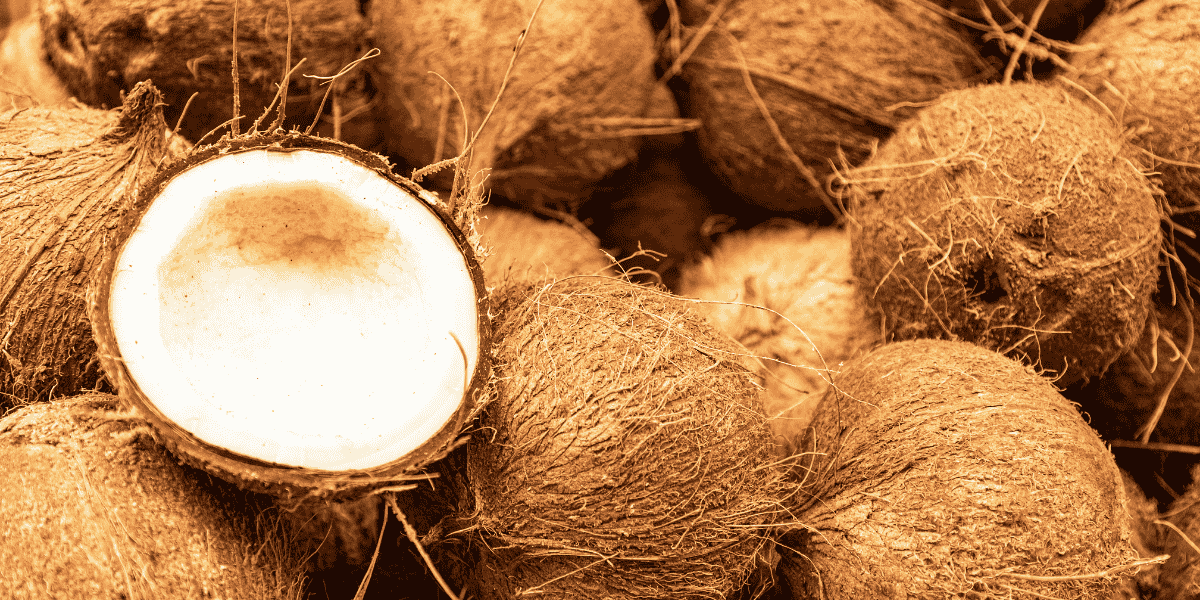
Coconut is among the most stable commercial crops suited to local soil and climate conditions, forming a steady plantation base across much of the archipelago. Yet sector specialists point out that while cultivation is widespread, downstream fibre utilisation remains limited. The islands largely sell coconuts in raw form, with little organised extraction or processing of fibre from husk.
Coir industry experts describe this as a classic case of primary production without value addition. On the mainland, particularly in Kerala and Tamil Nadu, coconut husk is systematically aggregated and processed into fibre, yarn, mats, geo-textiles, horticultural substrates, and industrial products. In the islands, by contrast, husk is still mostly treated as waste or used informally for rope-making and small handicrafts.
Development planners familiar with island agriculture say earlier assessments had identified sufficient coconut availability to support small coir-processing units locally. However, the sector did not scale up because of fragmented supply chains, lack of husk collection systems, limited access to machinery, and the absence of organised production clusters. Transport costs and weak market linkages further discouraged private investment.
Coir’s Expanding Uses
Beyond its familiar use in doormats and carpets, coir today feeds into a wide range of industries, according to fibre sector experts. The material is used in rope and cordage, mattress cores, upholstery padding, acoustic and insulation boards, and biodegradable packaging. In agriculture, coir pith and fibre serve as soil substitutes, nursery media, mulching mats, and hydroponic growing material, forming one of India’s fastest-growing horticulture export segments. Infrastructure uses have also expanded, with coir geo-textiles deployed for slope protection, shoreline stabilisation, embankment reinforcement, and mangrove restoration. The fibre additionally supports handicrafts, furniture components, and eco-friendly construction panels, making it one of the few natural materials with applications spanning household goods, farming, construction, and climate-resilience projects.
Fibre market analysts say the Centre’s renewed emphasis on natural fibres, reflected in the latest jute MSP revision, coincides with rising national demand for biodegradable materials in packaging, infrastructure, and sustainability programmes. This shift, they say, could create indirect momentum for other natural fibres such as coir.
Coastal engineering specialists note that coir has particular advantages for island environments. Its natural resistance to saltwater and biodegradability make it suitable for shoreline stabilisation, slope protection, embankment reinforcement, and mangrove restoration, applications directly relevant to the Andamans’ erosion management and climate-resilience needs.
Coir sector consultants also emphasise that the industry does not require heavy industrial infrastructure. Fibre extraction units, spinning centres, mat weaving clusters, and handicraft workshops can be established close to coconut-growing villages. Such decentralised production models are labour-intensive and often support women-led employment systems, which is one reason the coir sector on the mainland has become a major rural livelihood source.
Institutional pathways already exist to support such development. Officials associated with coir promotion programmes point out that the Coir Board provides training, technology support, and market development assistance across several states. With similar institutional engagement, they say, island-based units could gradually integrate into national value chains rather than remaining limited to plantation agriculture.

Policy observers say the jute MSP hike therefore carries a wider message: natural fibres remain central to India’s agricultural and industrial strategy. For the Andaman and Nicobar Islands, the opportunity lies not in cultivating new crops but in leveraging coconut, already embedded in the local economy, to build a fibre-based rural industry.
If husk aggregation systems, small processing clusters, and institutional support mechanisms are introduced, experts believe coir could emerge as one of the few industries naturally aligned with the islands’ geography. Such a shift could generate employment, reduce agricultural waste, and strengthen environmentally compatible manufacturing without altering existing cropping patterns.