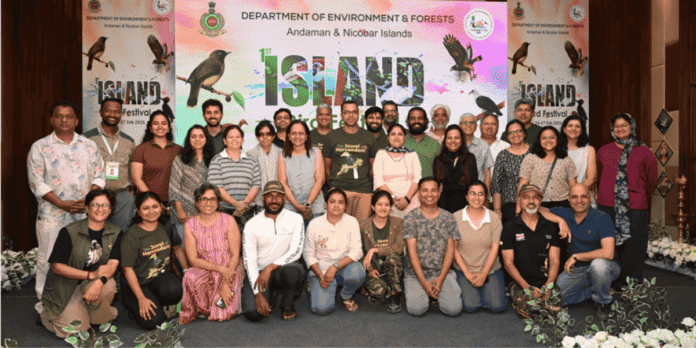
The first Island Bird Festival concluded on February 17 in the Andaman and Nicobar Islands after a four-day programme that brought together birdwatchers, researchers and photographers to highlight the region’s avian biodiversity and ecotourism prospects. The event, held from February 14 to 17, drew delegates from multiple states along with local participants and focused on conservation awareness and sustainable tourism.
Organisers reported participation of 31 delegates from nine states along with six local participants. The festival received support from the Andaman Avians Club, which contributed to field activities and outreach programmes during the event.
The festival opened on February 14 at Chidiyatapu in the presence of Chief Secretary Chandra Bhushan Kumar and Principal Chief Conservator of Forests Sanjay Kumar Sinha. Cultural presentations, including Nicobari dance performances, a bird-themed act and a conservation skit by Forest Training Institute trainees, formed part of the inaugural session, with emphasis on protecting the Edible-nest Swiftlet.

Field excursions formed a major component of the festival. Delegates visited birding hotspots including Mahatma Gandhi Marine National Park, Mount Manipur National Park, Stewartgunj wetlands, Kalatang, Chidiyatapu Biological Park, Bada Balu, Ograbraj and Sippighat. Participants collectively recorded more than 130 bird species during these field visits, including several endemic island birds.
Notable endemic sightings included the Andaman Woodpecker, Andaman Bulbul, Andaman Drongo, Andaman Coucal, Andaman Serpent Eagle, Andaman Crake, Andaman Flowerpecker, Andaman Treepie, Andaman Shama, Andaman Cuckooshrike, Andaman Green Pigeon and Andaman Teal. Observers also documented other species such as White-bellied Sea Eagle, Black-winged Stilt, Common Snipe, Grey-headed Lapwing, Oriental Skylark and Eyebrowed Thrush, along with winter migrants and coastal birds.
The academic sessions focused on conservation science, tourism and bird ecology. Dhananjay Mohan delivered a presentation on developing bird-based ecotourism, drawing examples from Uttarakhand to illustrate how conservation and tourism can complement each other. Wildlife filmmaker Dhritiman Mukherjee discussed field experiences in bird photography and storytelling.
Scientific discussions included a session by Rajah Jayapal on monitoring island bird populations and research methodologies. Shashank Dalvi explained migratory bird routes linking the islands with global flyways. P. Pramod conducted sessions on endemic avifauna and acoustic communication in birds, focusing on behavioural interpretation through bird calls.

Organisers also introduced pelagic birding to participants, enabling observation of seabirds in marine habitats. A stargazing session complemented the programme by connecting ecological awareness across terrestrial, marine and night-sky environments.
The festival concluded with a valedictory function on February 17 chaired by Dhananjay Mohan. Participants shared field experiences and certificates and prizes were distributed to delegates and team leaders. Organisers stated that the event underscored the ecological value of the islands and the importance of habitat protection while promoting responsible tourism initiatives.
Officials said the festival linked cultural heritage with conservation goals and aimed to strengthen awareness about biodiversity protection in the region. The event also sought to position the Andaman and Nicobar Islands as a destination for nature-based tourism while emphasising scientific monitoring and sustainable practices.