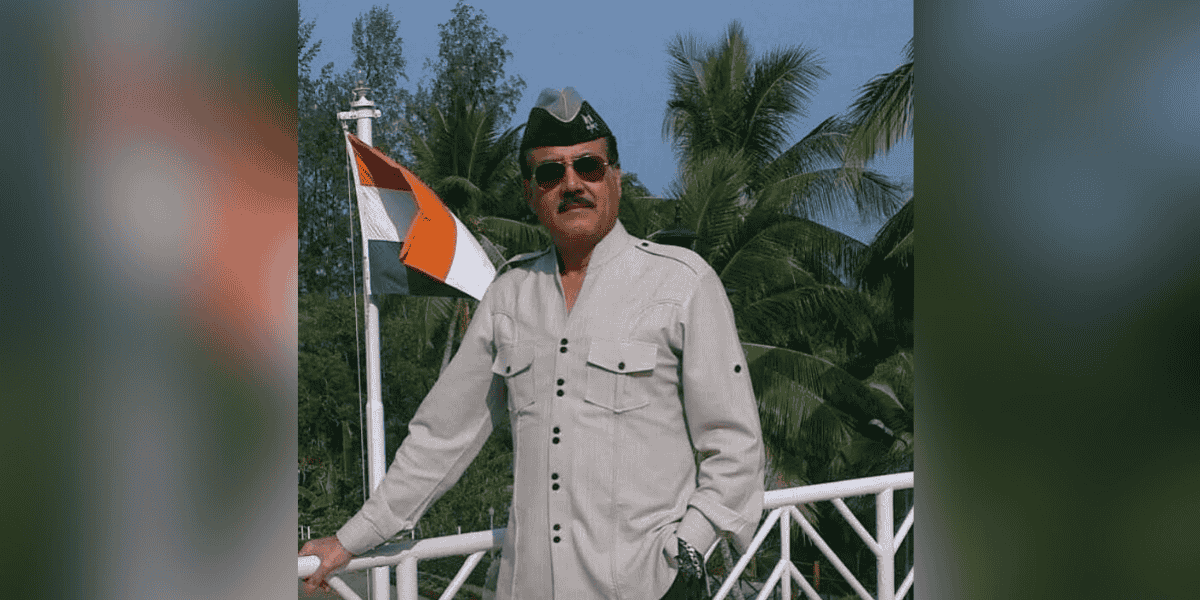
The contentious ₹72,000-crore Great Nicobar Island project has drawn a new proposal from Lt. Gen. (Retd.) A.K. Singh, former Southern Army Commander and ex-Lieutenant Governor of the Andaman and Nicobar Islands. Singh has suggested that the Andaman Sea near Rutland Island could serve as a viable alternative for a transhipment hub, easing ecological pressure on Great Nicobar.
Speaking to The Wave Andaman, Singh recalled first reviewing the project file during his tenure as Lieutenant Governor. He said he was not convinced by the original proposal without further study. “I flew with officers to understand the scale, and I wrote in my file that there were many things requiring deep research, on the environment, the displacement of the Shompen tribals, and long-term ecological effects,” Singh explained.
He noted that the chosen site in Great Nicobar was “hazard-prone” and stressed that irreversible decisions should only follow extensive expert evaluation. “The result is not to bulldoze the project but to be very careful with the means and methods of development. The most important concern is the environment,” he said.
The Great Nicobar Project, one of the most ambitious infrastructure plans in the islands’ history, has been in the making for years. Envisioned by NITI Aayog, it includes an international transhipment port at Galathea Bay, a greenfield international airport, a power plant, and a township designed to house over three lakh people. Estimated to cost ₹72,000 crore over three decades, the project is intended to position India as a maritime hub rivalling Singapore and Colombo.
However, conservationists and tribal rights advocates have raised alarms over the ecological footprint. Critics highlight the risks of large-scale deforestation, loss of biodiversity, and displacement of the Shompen, a Particularly Vulnerable Tribal Group (PVTG) whose survival depends on the forest ecosystem.
Singh acknowledged the inevitability of development in the islands but urged a balance between economic goals and ecological realities. “Development is inevitable, but it should not be a copy of mainland India’s growth model. We should do only what the environment and the tribals can sustain in harmony with development,” he said.
As a workable alternative, Singh suggested leveraging Rutland Island’s deep waters for transhipment activities. The idea, he explained, would involve larger cargo vessels offloading in the Andaman Sea, from where smaller feeder vessels could transport goods to ports across the region. Such a model, he argued, could provide strategic maritime benefits while reducing environmental strain on Great Nicobar.
He also underlined the need for clear safeguards. “Coal and other polluting consignments should never be considered in these sensitive waters,” Singh cautioned, pointing to the fragility of the island ecosystems.
While acknowledging that the debate around the project has taken political overtones, Singh urged decision-makers to move with caution. “We are living in interesting times and I am sure the government, the administration, and NITI Aayog are hearing these concerns,” he said, adding that there should be no hurry in finalizing a project of such scale and consequence.
India’s strategic location, he concluded, lies between Singapore and Colombo, and this maritime advantage must be developed carefully. “The government should weigh ecological risks with care and not sacrifice the islands’ unique environment and indigenous communities for short-term gains,” Singh said.
With voices like Singh’s adding to the debate, the future of the Great Nicobar Project remains deeply contested, straddling the fine line between strategic ambition and ecological responsibility.