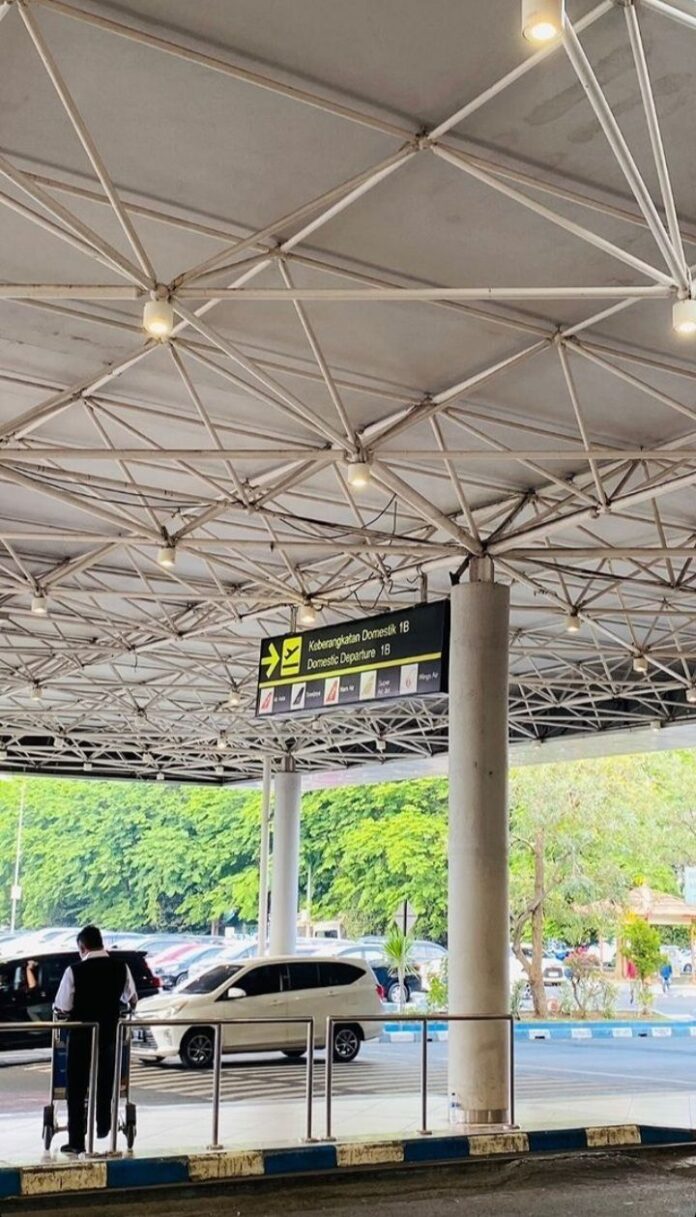
A growing concern among local taxi and cab operators has emerged at Veer Savarkar International Airport, where the current system of passenger car booking has been perceived as tilted in favour of a single service provider. The issue has prompted local stakeholders to approach airport authorities with a proposal aimed at ensuring fair opportunities for all drivers while also improving passenger convenience.
At present, passenger booking preference is extended to WTI cabs, which operate from a counter located just outside the airport. Local drivers, on the other hand, have not been permitted to enter the airport lanes to pick up passengers who arrive without pre-booking. Many of these drivers have also faced penalties for attempting to access the pickup points, a situation that has left them at a disadvantage.
For visitors arriving at the airport, the system has created practical difficulties as well. With WTI cabs positioned as the primary option, passengers who might have wished to hire local taxis were left with no immediate choice. Those preferring alternative services had to walk a considerable distance, often with luggage in hand, behind the Savarkar statue to locate independent cabs. This not only added inconvenience but also restricted healthy competition at a key gateway to the islands.
In response, representatives of local drivers, led by community leaders, met the airport director to present a structured alternative. The proposed model revolves around a token-based system, under which taxis would be allowed to enter in small, organized batches. For example, vehicles numbered one to five would be permitted to enter, collect passengers, and exit before the next group, numbered six to ten, would be admitted. This rotation would continue, ensuring that all registered drivers have an equal chance of accessing passengers directly at the airport.

The model is designed to balance fairness with efficiency. For the drivers, it creates a level playing field where no single operator dominates access. For passengers, it means more choice and reduced hassle in arranging transport. Importantly, the system retains order and avoids congestion by limiting the number of vehicles inside the pickup zone at any given time.
Supporters of the change have also pointed out that such an approach could align with modern transport practices, where technology and management systems streamline operations. With customizable booking engines, third-party integration possibilities, and user-friendly interfaces, there is scope to build a robust and compliant mechanism that not only meets the needs of the airport but also empowers local entrepreneurs.
The proposed model is also seen as cost and time efficient, as it uses existing infrastructure without requiring large-scale overhauls. By adopting scalable and reliable solutions, the airport authority could demonstrate a commitment to fair competition, community support, and customer convenience in one stroke.
For the local business community, the issue goes beyond immediate income. Access to airport passengers is a vital opportunity for drivers, many of whom represent small-scale operations that depend heavily on daily earnings. Creating a system that recognises their role ensures that economic benefits are shared more widely, strengthening the island economy in the process.
The meeting with the airport director is seen as an encouraging step, with stakeholders hopeful that a mutually beneficial solution will emerge. As the islands continue to welcome a growing number of visitors, addressing transport fairness at the airport becomes crucial. Ensuring that both organized operators and independent drivers can thrive will not only enhance the arrival experience for passengers but also reinforce the sense of opportunity that tourism is meant to bring to local communities.
The issue of airport cab bookings has thus become more than a logistical challenge. It reflects the balance between established operators and local businesses, between convenience and fairness. By exploring innovative, transparent, and inclusive systems, the Andaman administration has an opportunity to set an example of how tourism-led economies can grow while keeping community interests at heart.