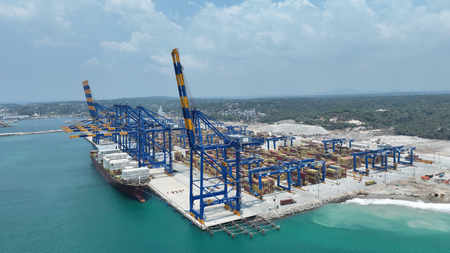
Adani Ports and Special Economic Zone Limited (APSEZ) has become India’s first Integrated Transport Utility to adopt the Taskforce on Nature-related Financial Disclosures (TNFD) framework, marking a significant milestone in nature-positive infrastructure and sustainability reporting.
By embracing the TNFD guidelines, APSEZ joins a select group of global port operators committed to integrating biodiversity protection and transparent environmental reporting into their core business strategy. The company aims to strengthen its role in promoting science-based, sustainable marine and coastal ecosystem management.
According to an official statement, APSEZ will implement TNFD-aligned reporting to evaluate and disclose its nature-related dependencies, impacts, risks, and opportunities. The move reflects the company’s proactive approach to embedding environmental considerations into business decision-making.
The TNFD is a global, science-driven initiative formed by a coalition including the United Nations Environment Programme Finance Initiative (UNEP FI), United Nations Development Programme (UNDP), World Wildlife Fund (WWF), and Global Canopy. It provides guidance to corporations in identifying, managing, and disclosing risks associated with environmental degradation and biodiversity loss.
Ashwani Gupta, Whole-Time Director and CEO of APSEZ, said the company views nature conservation as integral to its long-term strategic growth.
“We firmly believe responsible business practices drive long-term success. Our adoption of the TNFD framework demonstrates support for nature-related corporate reporting at COP30. We see nature-related issues as a strategic risk management priority,” Gupta stated.
He added that the TNFD framework offers a robust mechanism to integrate nature into corporate governance and risk assessment, while enhancing APSEZ’s contribution to biodiversity conservation and sustainable infrastructure.

The company plans to incorporate TNFD recommendations into its corporate reporting starting from FY26, further expanding its disclosure standards in alignment with global best practices.
APSEZ has already institutionalized climate risk assessment and disclosure frameworks and has been a consistent leader in environmental stewardship. It has afforested over 4,200 hectares of mangroves and is actively conserving another 3,000 hectares, positioning it as India’s largest private sector contributor to mangrove ecosystem restoration.
The adoption of the TNFD framework is also part of APSEZ’s broader Environmental, Social, and Governance (ESG) strategy, which focuses on integrating sustainability into every aspect of its operations, from port management to logistics and maritime services.
Currently, APSEZ operates a network of 15 strategically located ports and terminals across India’s west, south, and east coasts. The company also maintains a diversified marine fleet of 127 vessels, underscoring its scale and capability in supporting India’s maritime and logistics infrastructure.
With this development, APSEZ sets a new benchmark for environmentally responsible corporate governance, reinforcing its commitment to achieving nature-positive growth and contributing to India’s transition toward sustainable infrastructure development.