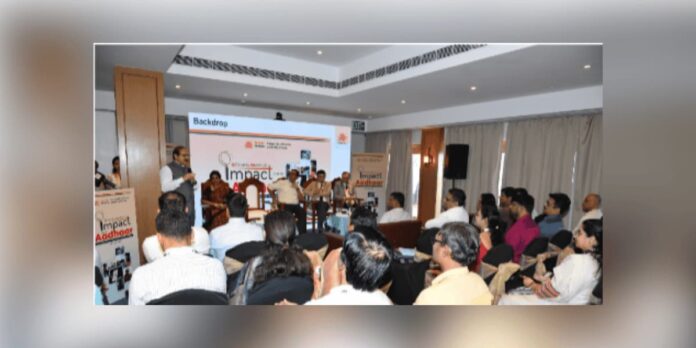
Efforts to strengthen Aadhaar coverage and improve last-mile service delivery in the Andaman & Nicobar Islands came into focus at a state-level workshop that brought together senior officials, administrators, and technical experts to review progress and identify gaps, particularly in remote and tribal regions.
The workshop, aimed at maximising the impact of Aadhaar, was attended by senior representatives from the Unique Identification Authority of India (UIDAI) and chaired by the Chief Secretary of the A&N Administration. Discussions centred on expanding enrolment, improving authentication systems, and enhancing the efficiency of Direct Benefit Transfer (DBT) mechanisms in the geographically dispersed island territory.
A key issue flagged during the deliberations was the challenge of reaching remote populations, especially tribal communities living in areas with limited connectivity. Officials noted that despite infrastructural constraints, efforts are underway to ensure saturation in Aadhaar enrolment, with particular emphasis on children in the 0–5 age group. The administration indicated that achieving full coverage remains a priority, with targeted strategies being implemented to bridge existing gaps.

The evolution of Aadhaar since its inception and its expanding role in governance formed a central theme of the workshop. Officials outlined how the system has transitioned beyond identity verification to become a backbone for service delivery, enabling processes such as bank account opening and welfare disbursement without the need for physical presence. The integration of Aadhaar into multiple platforms was highlighted as a key factor in improving accessibility and reducing administrative bottlenecks.
Technical sessions during the workshop provided insights into the operational aspects of Aadhaar usage. Presentations covered both enrolment and update mechanisms as well as authentication and verification systems, with a focus on recent technological advancements. Officials demonstrated how these systems are being adapted to suit regions with connectivity limitations, including the use of flexible and offline solutions.
The role of Aadhaar in strengthening DBT frameworks was also discussed in detail. With welfare schemes increasingly relying on direct transfers to beneficiaries, ensuring accurate identification and authentication has become critical. Officials highlighted that improving Aadhaar integration can help reduce leakages, enhance transparency, and ensure that benefits reach intended recipients without delays.
A live demonstration of Aadhaar verification processes was conducted as part of the workshop, offering participants a practical understanding of the system’s functionality. The interactive sessions that followed allowed stakeholders to raise queries and share on-ground experiences, contributing to a more comprehensive assessment of challenges and solutions.
The workshop also recognised the contributions of field-level personnel, with awards presented to best-performing operators and supervisors. Their role in maintaining enrolment standards and ensuring service delivery in difficult terrains was acknowledged as a key component of the programme’s success.

Deliberations extended beyond technical aspects to include administrative coordination and monitoring. A Meeting of the Unique Identification Implementation Committee was held at the conclusion of the workshop, during which performance across various parameters was reviewed, and key agenda items were discussed. The review aimed to streamline processes and strengthen accountability mechanisms within the system.
The discussions underscored the importance of sustained efforts to achieve universal Aadhaar coverage in the islands, particularly in light of its growing role in governance and welfare delivery. With connectivity challenges continuing to pose constraints, the focus remains on adopting adaptive solutions and strengthening institutional coordination to ensure that no segment of the population is left out.
The workshop concluded with a renewed emphasis on leveraging Aadhaar as a tool for inclusive development, with officials indicating that continued innovation and targeted interventions will be essential to meet the unique challenges of the island region.



