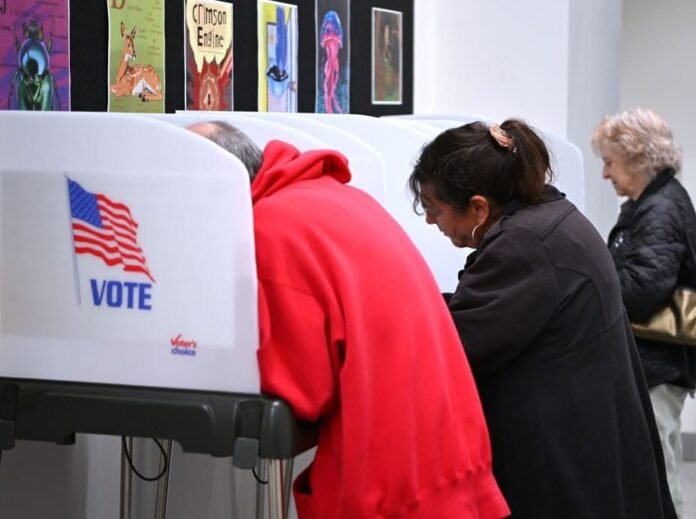
Sri Vijaya Puram, November 4: The Democratic Party’s strong performance in the US midterm elections could have implications extending well beyond American politics, with global investors assessing its potential impact on oil prices, trade policies, financial markets and geopolitical tensions. For India, the outcome could offer some economic relief through softer crude prices, a weaker US dollar and declining Treasury yields, although uncertainty over bilateral trade relations is likely to persist.
The US dollar index and Treasury yields fell sharply as investors increasingly factored in a Democratic sweep in one of the most closely watched midterm elections. Market experts said the scale of the Democratic victory could influence investor sentiment and shape expectations around the economic and foreign policy direction of the United States.
One of the immediate areas of interest is the global energy market. Analysts believe a stronger Democratic showing could increase political pressure on US President Donald Trump to reconsider his approach towards the conflict involving Iran. Any reduction in geopolitical tensions could ease concerns over crude oil supplies and potentially bring down international oil prices.
For India, which remains heavily dependent on imported crude oil, a sustained decline in global oil prices could provide significant economic relief.
India’s Outlook
The potential benefits for India are expected to emerge more through geopolitical and macroeconomic developments than through any immediate change in market access or trade arrangements.
Lower crude prices would help reduce India’s import expenditure and ease pressure on the current account. A weaker US dollar could also provide some relief to the Indian rupee, while softer US Treasury yields may improve the attractiveness of emerging markets, including India, for foreign investors.
Lower borrowing costs and improved investor sentiment could further support domestic economic activity.
However, uncertainty surrounding US trade policy remains a concern. India’s proposed trade agreement with the United States is yet to be resolved, and market experts do not expect the Democratic victory to significantly improve the prospects of an agreement in the immediate future.
Although a Democratic-controlled Congress could increase scrutiny of the Trump administration’s trade measures, the President continues to retain considerable executive authority over foreign policy and trade-related decisions. Consequently, a change in the balance of power in Congress may not translate into an immediate shift in Washington’s approach towards India.
Sectoral Impact
The financial, energy and technology sectors could experience near-term pressure as investors anticipate greater regulatory scrutiny and the possibility of higher taxes in the future.
Financial institutions may face increased oversight, while energy companies could encounter additional headwinds if international crude prices begin to retreat from elevated levels.
The technology sector, particularly companies operating in emerging and high-growth areas, may also face closer regulatory attention under a Congress with a stronger Democratic presence.
Artificial intelligence, however, is expected to remain a major investment theme despite the changing political landscape.
Analysts at global investment bank Morgan Stanley expect AI-related spending and data-centre expansion to continue, reflecting sustained demand for computing infrastructure and digital services. However, governments could assume a more prominent role in determining how future infrastructure projects develop, including through regulatory decisions and policy interventions.
Tariff Uncertainty
Trade policy is another area likely to attract attention following the election.
A Democratic-controlled Congress could intensify oversight of Trump’s tariff policies and potentially challenge their implementation through legislation. However, analysts do not anticipate a rapid withdrawal of existing tariffs, given the considerable authority the President retains over trade measures.
For global markets, the distinction between increased congressional scrutiny and an actual reversal of executive policy will be important. Investors are likely to monitor whether the election outcome results in concrete changes to trade arrangements or simply increases political friction between the White House and Congress.
2028 In Focus
Beyond the immediate economic implications, the scale of the Democratic victory could offer an early indication of changing political sentiment in the United States ahead of the 2028 presidential election.
For investors, the results are likely to serve as an important indicator of the political environment in which future economic, regulatory and trade policies will be shaped.
While a Democratic win could alter the balance of power in Washington, its impact on global markets will depend on how far the new political equation translates into actual policy changes.
For India, the immediate opportunity lies in the possibility of lower energy costs, improved currency stability and stronger foreign investment sentiment. However, unresolved trade negotiations and continuing geopolitical uncertainties mean that the broader economic benefits will depend on developments beyond the election results themselves.