Sri Vijaya Puram, October 25: As tourism grows and modern consumer tastes reshape the market for souvenirs, the traditional handicrafts of the Andaman and Nicobar Islands face a difficult question: how can centuries-old skills survive when the communities that practise them are steadily shrinking in number?
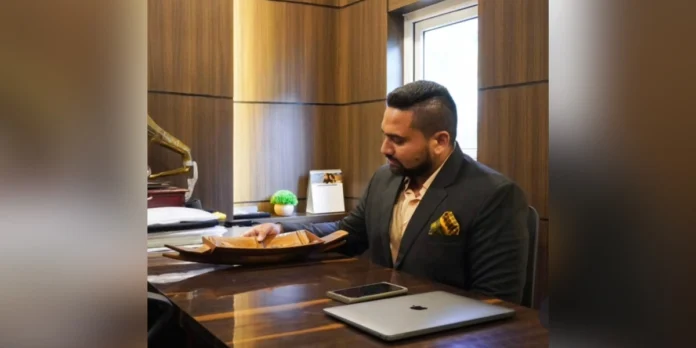
For Ebrahim Jadwet, the answer lies in making traditional craftsmanship economically viable without losing its cultural identity. He believes the islands’ development must extend beyond infrastructure and tourism to include the preservation of heritage, the empowerment of artisans and the creation of sustainable livelihoods for future generations.
A member of the Jadwet family, one of the islands’ oldest business families, Ebrahim grew up in the Andaman and Nicobar Islands before moving to Canada, where he spent 11 years. His decision to return in 2019 was driven by his attachment to the islands and a desire to contribute to the local economy.
Since returning, he has sought to explore how the islands’ distinctive handicrafts can find a stronger place in the contemporary marketplace while retaining the stories, skills and cultural traditions behind them.

The islands’ handicrafts are closely connected to their natural surroundings and diverse communities. Coconut shells, bamboo, cane and responsibly sourced wood have long served as materials for objects that combine utility, artistic expression and cultural significance.
Yet, despite the growth in tourist arrivals, traditional handicraft-making within communities such as the Nicobarese and Karen has declined. The loss of these skills would mean more than fewer souvenirs for visitors; it could also weaken an important link between younger generations and their cultural inheritance. Some traditional products from the islands have geographical indication (GI) recognition, further underlining the value of protecting their distinctive identity.
Ebrahim believes these crafts deserve greater recognition in domestic and international markets. For him, preserving tradition does not mean keeping it frozen in time. Instead, traditional techniques can be complemented by contemporary designs and improved presentation to appeal to modern consumers without compromising their authenticity.
This thinking led to the launch of Ramolon in 2024, a boutique store in the heart of Sri Vijaya Puram that promotes local traditional handicrafts and artwork. The initiative reflects his effort to bring island-made products closer to customers and create a market for craftsmanship that might otherwise struggle to compete with mass-produced decorative goods.
His contribution was recognised with the Lt. Governor’s Commendation Award in 2024.
Environmental responsibility forms another important part of his vision. In an ecologically fragile archipelago, he believes economic opportunities must be developed with care for the natural resources on which local communities depend.
He advocates promoting handicrafts made from sustainable materials, encouraging responsible sourcing and reducing dependence on imported decorative products, including shells and pearls that do not originate in the islands. Locally manufactured alternatives, he believes, could allow tourism spending to support island producers while giving visitors more meaningful souvenirs.
The larger challenge, however, is ensuring that the people who preserve these traditions benefit from their commercial value.
Ebrahim sees considerable scope for supporting local artisans, women entrepreneurs and young people through structured training, improved product design, access to modern technology and better marketing. He believes the Andaman and Nicobar Administration should establish training centres where traditional crafts can be taught systematically, helping prevent valuable skills from disappearing as older practitioners leave the trade.
Among the traditions he wants to see preserved are the Nicobarese hodi and hut, woven-leaf mats, traditional Karen cowbells, miniature bows, bamboo fish traps and cane and rattan baskets. These objects represent different aspects of community life and indigenous knowledge, making their preservation as important as their potential commercial value.

Tourism, he believes, offers an opportunity to connect this heritage with a wider audience. A recognisable identity such as “Handcrafted in Andaman” could help distinguish locally manufactured products from imported souvenirs and establish consumer confidence in their origin.
Such a brand could be promoted through retail outlets at airports, hotels and resorts, exhibitions and digital marketplaces. Partnerships with designers, tourism operators and hospitality businesses could also create distinctive product collections that combine traditional skills with contemporary appeal.
Ultimately, Ebrahim Jadwet’s vision is about building an economy in which cultural preservation and commercial opportunity reinforce each other. By giving traditional artisans access to markets and ensuring that their work is valued, the islands could strengthen local livelihoods while safeguarding an irreplaceable part of their identity.
For an archipelago celebrated for its natural beauty, the opportunity is to ensure that visitors take home more than memories of its beaches and forests. They could also carry a piece of its living heritage, made by local hands, shaped by generations of knowledge and sustained by an economy that values the people behind it.