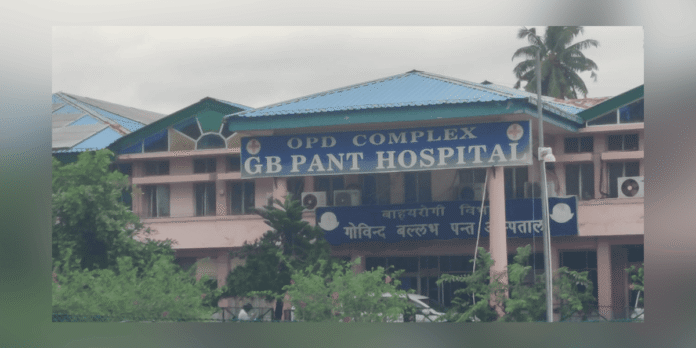
Sri Vijaya Puram, Aug 20: A fresh push to involve AIIMS or another premier Central medical institution in strengthening Andaman and Nicobar Islands’ lone medical college has brought the state of tertiary healthcare in the Islands back into focus, amid persistent specialist shortages, dependence on mainland hospitals and concerns following recent deaths at G.B. Pant Hospital.
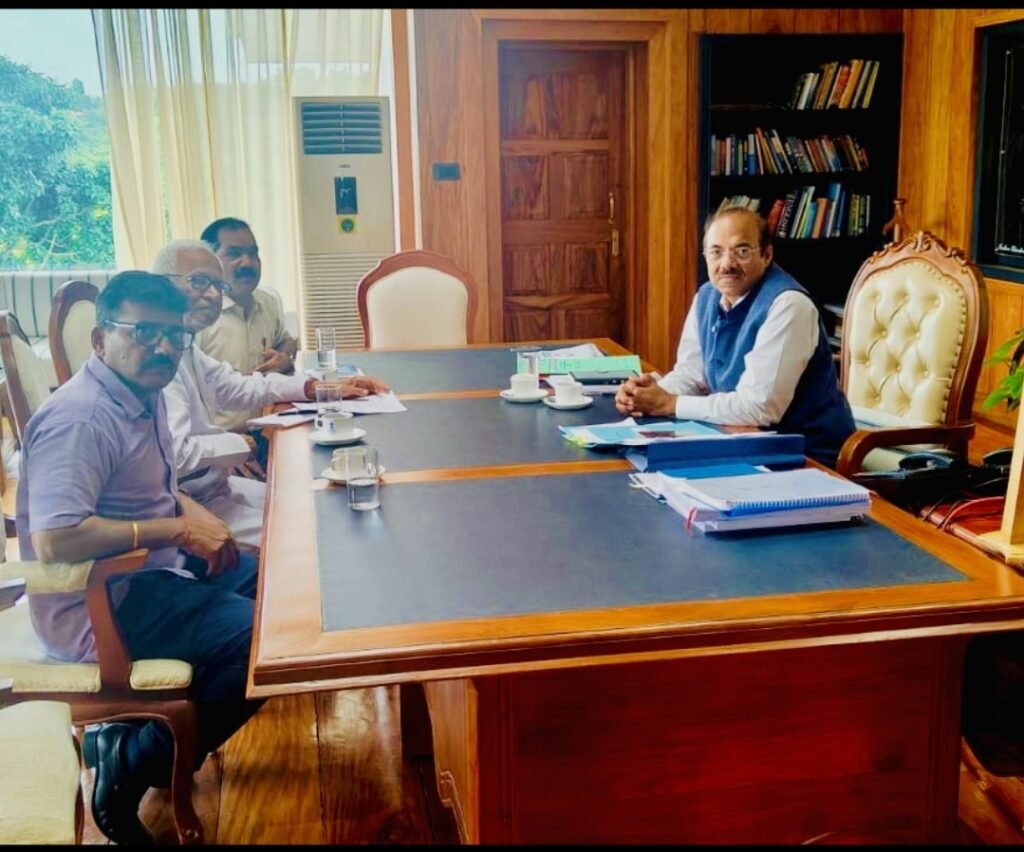
The issue figured prominently during a meeting between Andaman and Nicobar Islands MP Bishnu Pada Ray and newly appointed Chief Secretary Gyanesh Bharti. The two also discussed several other issues concerning the Islands, including a domicile or local policy, constitution of the OBC Commission, Ease of Doing Business reforms, old-age pension and the condition of NH-4 in North and Middle Andaman.
The renewed focus comes more than a decade after the Andaman and Nicobar Islands Institute of Medical Sciences (ANIIMS) was established in 2015 under the Society Mode with the objective of strengthening medical education and tertiary healthcare in the geographically isolated Union Territory. Developed around G.B. Pant Hospital, the medical college was expected to improve specialist treatment locally and reduce the need for Islanders to travel to mainland hospitals.’
Concerns over the healthcare system have intensified following recent deaths at G.B. Pant Hospital. In February, Ray demanded a judicial inquiry into the death of BJP founder member P. Elango, whose family alleged medical negligence after he was admitted to the hospital with severe stomach pain. The allegations have not been independently established, and the circumstances of the death would require medical or official investigation before responsibility can be attributed.
The significance of such cases goes beyond allegations surrounding an individual death. They have again raised a longstanding question for Islanders: what happens when a critically ill patient needs specialist expertise or treatment that is unavailable locally?
Representations made to the Union government have cited around ₹189 crore in capital expenditure for setting up the medical college, while approximately ₹557 crore was spent on doctors’ salaries and other expenses between 2014 and 2025.
More than a decade after ANIIMS was established, continuing referrals to mainland hospitals have therefore raised questions over whether this investment has translated into the level of tertiary healthcare the Islands require.

Specialists Remain Scarce
Attracting and retaining specialist doctors remains one of the central challenges. The remoteness of the Islands, limited professional opportunities for specialists and difficulties associated with long-term postings have complicated recruitment and retention.
For patients requiring advanced cardiac, neurological, oncological or other specialist intervention unavailable locally, referral to the mainland can become the only option. For an island territory, however, referral is fundamentally different from moving a patient by road from one mainland hospital to another.
A stable patient may be able to travel on a scheduled commercial flight. A critically ill patient requiring ventilation, continuous monitoring or intensive-care support may need an air ambulance, and the cost can run into several lakh rupees, depending on the aircraft, destination, medical crew and equipment required.
The potential financial burden can be enormous. In one case that subsequently came before the Central Administrative Tribunal, the family of a critically ill child referred from G.B. Pant Hospital to Apollo Children’s Hospital in Chennai paid ₹28.85 lakh for an air ambulance with ventilatory support in June 2021. The aircraft reached Port Blair, but the accompanying doctors concluded that the child was too critically ill to be transported. The child died the same day.
The case illustrates the extraordinary disadvantage geography can impose during a medical emergency in the Islands.
Even when an air ambulance is not required, families travelling to the mainland can face commercial airfare, accommodation, food, local transportation and potentially prolonged stays, apart from loss of income and disruption of family life.
The healthcare problem therefore extends beyond the number of vacant posts. It concerns whether the availability of specialist treatment, and, in an emergency, a family’s ability to finance transportation to the mainland, can influence access to potentially lifesaving care.
One proposal previously placed before the Centre sought to bring ANIIMS under the administrative and operational control of AIIMS. The argument was that association with a premier national institution could strengthen specialist availability, faculty capacity, hospital administration, clinical systems and medical education.
The Union Health Ministry, however, clarified in October 2025 that ANIIMS cannot simply be converted into an AIIMS under the existing framework. New AIIMS institutions are established as greenfield projects under the Pradhan Mantri Swasthya Suraksha Yojana, while the AIIMS Act does not provide for converting an existing medical institution into an AIIMS.
That effectively rules out a straightforward conversion, but leaves open other forms of institutional collaboration.
New Models Emerge
The latest discussion between Ray and the Chief Secretary has revived the possibility of greater involvement by AIIMS or another premier Central medical institution without changing ANIIMS’ legal identity.
Such an arrangement could potentially include deputation of specialist doctors, academic collaboration, institutional mentoring, technical assistance or support in strengthening hospital administration and tertiary healthcare services. No specific model arising from the latest meeting has yet been announced.
A Public-Private Partnership model has also previously been suggested. Institutions including Amrita Hospital, Apollo Hospitals and Sri Ramachandra Medical College have been cited in earlier representations as organisations with experience in advanced healthcare. The argument is that an established institution could bring specialist doctors, stronger hospital-management systems, academic expertise and advanced clinical practices to the Islands.
The Centre has meanwhile pointed to the National Health Mission as another route for strengthening healthcare. According to the Union Health Ministry, ₹426.76 crore was released to Andaman and Nicobar Islands under the NHM between 2014-15 and 2025-26, up to August 6, 2025. Additional proposals can be considered if included by the UT Administration in its Programme Implementation Plan, subject to available resources and NHM guidelines.
The healthcare challenge also extends beyond Sri Vijaya Puram. Concerns have been raised over specialist availability and infrastructure at district hospitals in Mayabunder and Car Nicobar, besides healthcare facilities across North and Middle Andaman and Nicobar.

ANIIMS is expected to function as the tertiary referral backbone for this network. Strengthening it alone, however, may not resolve the difficulties faced by residents of remote islands unless district and community-level healthcare, diagnostics and referral systems improve alongside it.
The meeting between Ray and Bharti has therefore provided another opportunity to revisit a healthcare challenge that has persisted despite years of investment and repeated representations.
With direct conversion into an AIIMS ruled out under the existing framework, the debate is increasingly about finding a workable alternative, whether through collaboration with a premier Central institution, specialist deputation, academic and technical partnerships, PPP participation or stronger support through the National Health Mission.
For Islanders, however, the success of any new model will ultimately be judged by a simpler measure: whether a patient requiring advanced treatment can increasingly receive that care within Andaman and Nicobar instead of being compelled to travel to the mainland.
In a medical emergency, an Island family should not have to confront two crises simultaneously: whether the treatment needed to save a patient is available locally and, if it is not, whether the family can afford the enormous cost of getting that patient to the mainland.